The first exclusively online law review.

Month: May 2024

Satellite States: China and America’s National Security in Space

Satellite States: China and America’s National Security in Space

By Samuel Naramore

Introduction

Over sixty years ago, in April of 1961, the Soviet Union successfully left the terrestrial safety of Earth and entered outer space (“space”) for the first time.[1] The Soviets entering space initiated the Cold War’s Space Race, prompting the U.S. to devote extraordinary amounts of resources towards developing its space capabilities––to beat the Soviets to the Moon.[2] After reaching the Moon in 1969 as part of NASA’s Apollo program, the United States (“U.S.”) claimed the position as the World’s premier space power.[3]

Since the “Space Race” of the Cold War, the U.S. has led the world in public and private expenditure in space.[4] Even though direct spending on space initiatives by the U.S. government has waned under recent presidential administrations, compared to other space-faring nations, the U.S. still invests more in its space program than any other country.[5] This expenditure since 1961 helped the U.S. establish itself as the dominant presence in space and leading the world in technological advancements––many of which American citizens increasingly rely on.[6]

Can AI-Generated Output Be Protected Under Intellectual Property Law?

Can AI-Generated Output Be Protected Under Intellectual Property Law?

By Audrey Zhang Yang

Introduction

AI-generated output represents a groundbreaking integration of technology and creativity that increasingly challenges established norms in the legal world. Inevitably, it raises the question on whether law and policy on intellectual property protection should evolve and adapt to recognize this changing innovation trend. The Progress Clause of the Constitution gives Congress the power to “promote the Progress of Science…by securing for limited Times to Authors…the exclusive Right to their…Writing.”[i] Pursuant to this authorization, the Copyright Act extends copyright protection for “original works of authorship fixed in any tangible medium of expression.”[ii] The Copyright Act neither defined “authorship” not “works of authorship.”[iii] Traditionally, courts assigns authorship to individuals who create original works. However, determining authorship is more challenging in the case of artificial intelligence (AI). Some believe that since AI systems are tools programmed by humans, the programmers are entitled to authorship rights.[iv] Also, when someone instructs AI to solve a problem, that person might qualify as an investor if she formulates a problem in a manner that requires inventive skill.[v] However, laws on intellectual property, patent, and copyright were not originally passed with AI in mind. Therefore, there is no law specifically addressing AI-generated invention in any jurisdiction.

Can I Be Protected Against Myself? Artificial Intelligence and Voice Replication

Can I Be Protected Against Myself? Artificial Intelligence and Voice Replication

By Jarrid Outlaw

With recent advancements in artificial intelligence (“AI”), voice replication has become a simple process that anyone can access and utilize.  Having one’s voice replicated to say anything an AI user wants is scary and can have extremely sinister effects, something that citizens should be protected from.  While everyday citizens are less likely to fall victim to abuse, the fact that such technology, fraught with the potential for violations exists, makes it so legal implications are bound to appear. 

Technological Innovation and the Evolution of Fourth Amendment Jurisprudence

Technological Innovation and the Evolution of Fourth Amendment Jurisprudence

By Sydney Coker

Throughout the course of modern history, the Supreme Court and its interpretation of the Fourth Amendment have undergone continual scrutiny as the Justices continue to reinterpret the meaning of the Fourth Amendment in the context of technological advancement. The cases of Olmstead and Katz demonstrate the Court’s shift to a metaphysical understanding of search and seizure in the light of technological advancement and its introduction of the right to privacy.

Pluto: Exploring Robotics Law Through the Lens of Science Fiction

Pluto: Exploring Robotics Law Through the Lens of Science Fiction

By Savannah Thorneberry

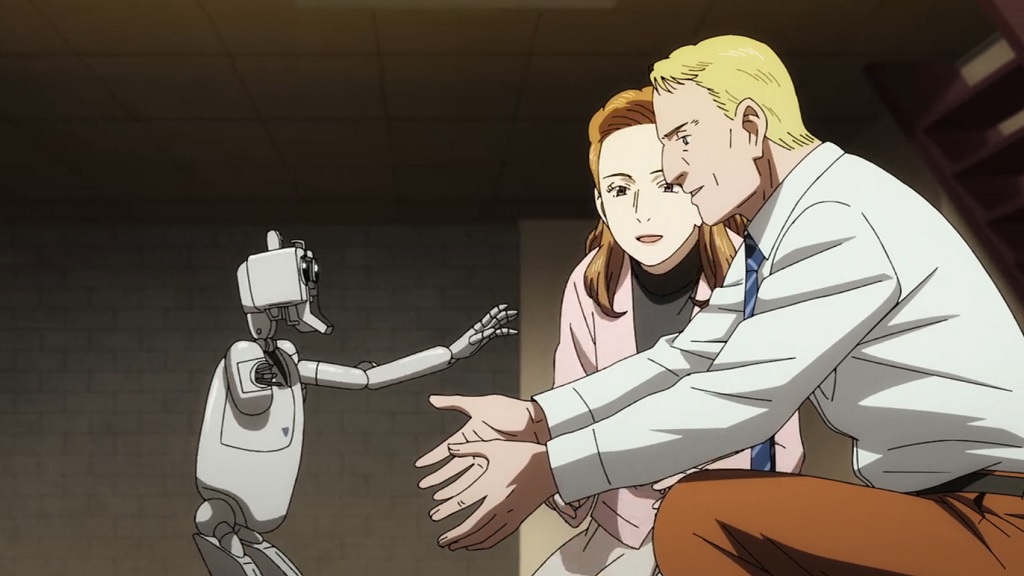
Robota is a Czech word meaning ‘forced labor,’ from this word, the common term ‘robot’ was born.[1] The term ‘robot’ owes its origins to Czech playwright Karel Capek who, in 1920, created the hit science fiction play Rossum’s Universal Robots.[2] The play depicts robots who are identical to humans in all aspects, minus a soul; without a soul, they lacked the ability to feel and have emotions the way humans do.[3] In media, robots are often portrayed as companions to humans.[4] While robots are not human, the advancement of robotic technology has prompted the discussion of what it means to be human, a question that science fiction and media have long grappled with.[5] Given the ambiguity around AI and robotics and the laws that regulate it, looking to media, specifically science fiction, can provide insights on a range of moral and ethical considerations as to how these laws might be shaped as technology continues to rapidly advance.

Powered by WordPress & Theme by Anders Norén