The first exclusively online law review.

Category: Blog Posts Page 38 of 79

Lessons From The German Saga Of Fake News – Proposing A Shift From The State To Communities

by Saiesh Kamath, 3L at the National University of Juridical Sciences, Kolkata

As the ubiquity of the Internet reigns, social media platforms have turned into essential vehicles in facilitating participation in a democratic culture.[1] However, these platforms are also used for the dissemination of ‘fake news’.[2] Fake news is an umbrella term which is used to denote propaganda, hoaxes, trolling, and often, satire.[3] The growth of ‘fake news’ has been flagged as a global cause of concern. This is due to its demonstrated capability of subverting democratic processes[4] and instigating violence,[5] with minorities and the marginalised being disproportionately affected.[6] Since fake news achieves virality on social media platforms, there have been calls to regulate the dissemination of such content on these platforms. Some nations have passed statutes in order to deal with this crisis.[7] A critical appraisal of such regulatory laws is necessary in order to construct a framework which will effectively curb the menace of fake news. In this regard, a critical look at the German law is necessary considering the large attention it has received from legislators and legislatures of many nations.[8]

In Part I of this paper, I will introduce the German law instituted to regulate fake news. In Part II, an implication on free speech will be explored. Part III will offer an alternative framework to counter fake news.

I. The Network Enforcement Act, 2017, of Germany

The necessity of countering fake news in Germany was sharpened due to the role played by hate speech and fake news in the Presidential elections of the United States of America in 2016. Hence, the Network Enforcement Act, 2017(hereinafter the Act) was passed in order to combat hate speech and fake news online[9] – two concepts that have increasingly become interconnected.[10] The Act was brought about for two reasons. Firstly, it was to ensure the enforcement of existent provisions in the German criminal code.[11] Secondly, it was to place the onus of such enforcement on social networks[12] (hereinafter intermediaries) with two million or more registered users in Germany.[13]

The Act mandates intermediaries to provide for the user to have a complaint mechanism against illegal content online.[14] In cases of “manifestly unlawful” content, intermediaries must take down the content within twenty-four hours.[15] In order to remove or block access to any other type of illegal content, a period of seven days is provided.[16] Failure to adhere to these requirements is considered a civil violation, and carries fines of up to fifty million Euros.[17]

II. Stifling Free Speech

The Act was considered one of the most expansive laws arising from a Western nation to tackle fake news.[18] However, civil rights activists, media organisations, and other groups condemned the law due to its implications on free speech.[19] Of the many legitimate arguments, one of the most compelling was that the law stifled free speech of people.[20]

There is a chilling effect on freedom of speech in two main ways. Firstly, it arises due to the burden imposed on intermediaries to make a call on what content qualifies as legal or illegal. Secondly, it is manifested through the phenomenon of over-removal.

The main criticism of the Act arises from the obligation imposed on intermediaries to monitor and take down illegal content online. The problem with this feature is that it privatizes enforcement of the law.[21] This happens because intermediaries are obliged to make a call on the legality of content and take down illegal content. However, intermediaries do not possess the technical legal knowledge to take a call on what content qualifies as legal or illegal. Hence, to assume such a level of understanding of the law onto an intermediary so as to equate its function akin to that of the Judiciary[22] is absurd.

While this unfair obligation in and of itself does not stifle speech, it creates, a phenomenon called ‘over-removal’.[23] This phenomenon entails broad and excessive censorship. In this case, over-removal happens due to financial disincentives in the form of fines created by the Act. In scenarios where intermediaries fail in their obligation to timely remove illegal content, they are penalized with fines. Given that intermediaries do not possess a level of understanding of the law so as to guarantee correct judgement for every instance in a time-sensitive framework, they err on the side of censorship and take down even content which is legal.[24] This is also problematic because censorship tends to disproportionately take away from the voices of minority groups.[25] Considering that minorities were intended to benefit from the Act, this consequence takes away from progress made in that direction.

This violates Article 5 of the Basic Law (the Constitution) of Germany which guarantees freedom of speech, expression, and opinion to the German people.[26] Additionally, over-removal takes away from the principle of freedom of speech that is enshrined in different international human rights and civil rights treaties and conventions.[27] The same reasoning was brought forward in the case against the French law on hate speech,[28] which was inspired by the Act.[29] The Constitutional Court struck down critical provisions of the Act, one basis being that it disproportionately infringed freedom of speech. In so doing, it articulated the importance of the freedom in democratic polity.[30]

A draft to amend the Act was introduced recently,[31] but it does not make any changes to the core tent of the Act being critiqued – privatizing law enforcement.

III. From Excessive State Intervention to Community Collaboration

The issue of fake news is not an easy one to analyse, let alone resolve. However, the approach of compromising one human right for preserving another is a position that is borne from the unique German experience with the collapse of a democratic order under the Nazis.[32] As such, this approach should not be replicated with reckless abandon in other nations, especially without the existence of similar historical lessons and popular mandate.

The social utility that is derived from free speech should not be laid at the sacrificial altar without considering other frameworks. In this regard, I argue that there needs to be a shift from an excessive state interventionist approach demonstrated by Germany to a rights-respecting framework of community collaboration.

Fake news targets users of intermediary platforms in insidious ways. Its core characteristic of being viral is used to expose users to fake news. The exposure of fake news to users is additionally problematic because users are susceptible to still believe it even after corrections are issued.[33] Hence, tackling the root of this issue would be to make users more resilient to fake news.

To do this, there needs to be a strategy to decrease the persuasion value of fake news, and build psychological resistance in users. In this regard, the ‘inoculation’ theory is useful. Arising from psychology, it essentially says that users may be ‘inoculated’ to fake news by exposing them to a ‘weakened version’ of fake news.[34] This would mean that users would be exposed to relatively apparent fake news. This exercise in identifying fake news would build resilience and increase vigilance of users. This would lead to a pathway where fake news tends to be preemptively ‘bunked’.[35]

Research around the inoculation theory and its effects are promising. When contextualised around the climate change narrative, users were made resistant to a specific piece of misinformation, and hence avoided the influence carries by fake news on climate change.[36] This is also promising given that the extent and reasons for climate change remains an issue which falls on partisan lines. Hence, it holds potential to be used for other influential partisan issues which are usually subject to fake news.

This research was also extended to help users spot the common strategies employed in producing fake news.[37] By exposing users to relatively apparent manipulation strategies used by fake news disseminators, users were better able to identify the tell-tale signs of fake news.[38] This study is more potent because the relatively time-consuming exercise of inoculating users against specific pieces of misinformation is, while still holding its own value to tackle specific pieces of pernicious and persistent misinformation, now subsumed in the wider understanding of manipulation tactics surrounding fake news. Hence, it functions like a ‘broad spectrum vaccine’.[39]

This approach of radically decentralising the exercise of countering fake news is better because it takes no part in subverting human and constitutional rights, and its consequent adverse effects on democratic discourse and polity. This is because it refuses to submit to false equivalencies of trade-offs between various rights or groups of rights. This approach also has the benefit of empowering the ultimate stakeholder: the user. While the times brought on by a more digitally connected world may consist of new dangers, a framework which is comfortable with de-emphasising cherished rights and principles should not be adopted when other rights-respecting frameworks exist.

In this framework, the State would still have a role. It would be tasked with devising strategies to facilitate collaboration between communities which are countering fake news. This would increase co-ordination between communities, and enable learning and sharing best practices from each other. This would be relevant in, and respectful of, a world with increasing diversity and culture, and would serve to acknowledge that a one-size-fits-all approach is not the best fit for a problem as complex and persistent as fake news.

[1] See Kate Klonick, The New Governors: The People, Rules, and Processes Governing Online Speech, 131 Harv. Law. Rev. 1600 (2018).

[2] See Alberto Alemanno, How to Counter Fake News? A Taxonomy of Anti-fake News Approaches, 9 Eur. J. Risk Regul. 1 (2018).

[3] See Mark Verstraete, Derek E. Bambauer, and Jane R. Bambauer, Identifying and Countering Fake News, Arizona Legal Studies Discussion Paper No. 17-15 (2017).

[4]See Alexis Mardigan, What Facebook Did to American Democracy, The Atlantic, (October 12 2017), https://www.theatlantic.com/technology/archive/2017/10/what-facebook-did/542502/.

[5] See Reuters, Man pleads guilty in Washington pizzeria shooting over fake news, (March 24, 2017, 8:11 PM) https://www.reuters.com/article/us-washingtondc-gunman/man-pleads-guilty-in-washington-pizzeria-shooting-over-fake-news-idUSKBN16V1XC (Last visited on 11 June 2020).

[6] See Kimberly Grambo, Fake News And Racial, Ethnic, And Religious Minorities: A Precarious Quest For Truth, 21(5) U. Pa. J. Const. L. 1319 (2019).

[7] See Fathin Ungku, Factbox: ‘Fake News’ laws around the world, Reuters (April 2, 2019, 3:43 PM), https://in.reuters.com/article/singapore-politics-fakenews/factbox-fake-news-laws-around-the-world-idINKCN1RE0XW.

[8]See Jacob Mchangama and Joelle Fiss, Germany’s Online Crackdowns Inspire The World’s Dictators, Foreign Policy (November 6, 2019, 10:47 AM), https://foreignpolicy.com/2019/11/06/germany-online-crackdowns-inspired-the-worlds-dictators-russia-venezuela-india/; See also Justitia, The Digital Berlin Wall: How Germany (Accidentally) Created a Prototype for Global Online Censorship, 3, 5, 17 (November, 2019), http://justitia-int.org/wp-content/uploads/2019/11/Analyse_The-Digital-Berlin-Wall-How-Germany-Accidentally-Created-a-Prototype-for-Global-Online-Censorship.pdf.

[9]See Press Release, Global Network Institute, (April 20, 2017), https://globalnetworkinitiative.org/proposed-german-legislation-threatens-free-expression-around-the-world/; See also Alana Schetzer, Governments are making fake news a crime but it could stifle free speech, The International Forum for Responsible Media Blog, (July 21, 2019), https://inforrm.org/2019/07/21/governments-are-making-fake-news-a-crime-but-it-could-stifle-free-speech-alana-schetzer/. (‘Schetzer’).

[10] See Kirsten Gollatz and Leontine Jenner, Hate Speech and Fake News – how two concepts got intertwined and politicized, Digital Society Blog (March 15, 2018), https://www.hiig.de/en/hate-speech-fake-news-two-concepts-got-intertwined-politicised/. (‘Gollatz and Jenner’).

[11] See Heidi Tworek and Paddy Leerssen, An Analysis of Germany’s NetzDG Law, Transatlantic High Level Working Group on Content Moderation Online and Freedom of Expression 2 (2019). (‘Tworek and Leerssen’).

[12] Id.

[13] Network Enforcement Act, 2017, Art. 1 § 1(2).

[14] Network Enforcement Act, 2017, Art. 1 § 3(1).

[15] Network Enforcement Act, 2017, Art. 1 § 3(2); Tworek and Leerssen, supra note 11.

[16] Network Enforcement Act, 2017, Art. 1 § 3(3); Tworek and Leerssen, supra note 11.

[17] Tworek and Leerssen, supra note 11.

[18] See Emma Thomasson, Germany looks to revise social media law as Europe watches, Reuters, (March 8, 2018), https://www.reuters.com/article/us-germany-hatespeech/germany-looks-to-revise-social-media-law-as-europe-watches-idUSKCN1GK1BN. (‘Reuters’)

[19] See Germany: Flawed Social Media Law, Human Rights Watch, (February 14, 2018, 12:01 AM), https://www.hrw.org/news/2018/02/14/germany-flawed-social-media-law.

[20] See Schetzer, supra note 9; Germany starts enforcing hate speech law, BBC News (January 1, 2018), https://www.bbc.com/news/technology-42510868; Gollatz and Jenner, supra note 10.

[21] Tworek and Leerssen, supra note 11 at 3.

[22]See Germany: The Act to Improve Enforcement of the Law in Social Networks, Article 19, 2 (August, 2017) https://www.article19.org/wp-content/uploads/2017/09/170901-Legal-Analysis-German-NetzDG-Act.pdf.

[23] Tworek and Leerssen, supra note 11 at 3.

[24] Reuters supra note 19; Schetzer, supra note 9.

[25] See Nadine Strossen, Freedom of Speech and Equality: Do We Have to Choose?, 25(1) J Law  Pol. 214 (2016).

[26] Grundgesetz, The Constitution of the Federal Republic of Germany, 1949, Art. 5.

[27] See International Covenant on Civil and Political Rights, 16 December 1966, Art. 19; Universal Declaration of Human Rights, 10 December 1948, Art. 2.

[28] See Chloé Berthélémy, French Avia law declared Unconstitutional: what does this teach us at EU level?, EDRi, (June 24, 2020), https://edri.org/french-avia-law-declared-unconstitutional-what-does-this-teach-us-at-eu-level/.

[29] See Mark McCarthy, In France What’s Illegal Offline Is Now Illegal Online, Forbes (May 18, 2020), https://www.forbes.com/sites/washingtonbytes/2020/05/18/in-france-whats-illegal-offline-is-now-illegal-online/#2609c3ce38b5.

[30] See Manny Marotta, France Constitutional Court strikes down most of online hate speech law, Jurist, (June 20, 2020, 4:47 PM) https://www.jurist.org/news/2020/06/french-court-strikes-down-most-of-online-hate-speech-law/.

[31] European Commission, Draft Act amending the Network Enforcement Act, 2020/174/D (Germany) (Notified on 30 March, 2020).

[32] See Rainer Hofmann, Incitement to National and Racial Hatred: The Legal Situation in Germany in Striking a Balance 160 (1992).

[33] See Sander van der Linden and Jon Roozenbeek, Bad News – A psychological vaccine against fake news, LSE Impact Blog (July 31, 2019), https://blogs.lse.ac.uk/impactofsocialsciences/2019/07/31/bad-news-a-psychological-vaccine-against-fake-news/.

[34] Id.

[35] Id.

[36] See Sander van der Linden, Anthony Leiserowitz, Seth Rosenthal, and Edward Maibach, Inoculating the Public against Misinformation about  Climate Change, 1(2) Global Challenges 5, 6 (2017).

[37] See Jon Roozenbeek and Sander van der Linden, Fake news game confers psychological resistance against online misinformation, 5 Palgrave Commun. 2, 8 (2019).

[38] Id.

[39] Id.
Data Protection in the Times of COVID-19: Indian Aspect

By: Aditi Jaiswal & Anubhav Das, 4th Year students of NUALS Kochi, RMLNLU Lucknow

Introduction

In the wake of COVID-19, where the collection of data is an essential tool to search and track the individuals infected, an issue might arise in the near future when this pandemic is over. The data collected now by the state can be used for its intended purpose, but it can also be used to the detriment of an individual. As a result of this data collection, the right to privacy, which has been declared a fundamental right by the Supreme Court, may be infringed.

Among the data collected to track individuals infected—or potentially infected—with COVID-19 is location data and  biographical data. This data is personal and can be used to understand an individual and make predictions about that individual which can be then be used against them. For an example, look at the app recently launched by the Indian government, the Aarogya Setu App. This app predicts the chances of an individual having COVID-19 by tracking the location of an individual. Using the individual’s location, the app then checks if that individual has come into proximity with an infected person. This location data can be used to predict the number of family members present, which grocery store they shop at, and more. Just as Target[1] predicted the pregnancy of a woman by analysing her shopping list, algorithms can be used to process the data collected, ostensibly for COVID-19 tracking, to learn things that one might never wish to reveal. The location tracking could even be used to predict something as personal as an extramarital affair.

Although the privacy policy[2] of the app mentions that the data collected, will be deleted after a certain period of time, do we have any legislation which could be used to make the state liable should they fail to do so? This article will deal with a very basic concept in data protection law: purpose limitation. This article will analyse the existing law in India and whether or not it can combat such issues, before further analysing the Data Protection Bill of 2019 and its importance in the current case.

The Present:

The principle of purpose limitation under the data protection law is this: the data collected must be used for the purpose specified and when that specified purpose is accomplished, the data must later be deleted. It is essential that this principle is adhered to with the data collected by the state to track COVID-19 cases. This is the only way to ensure the data can never be used later for any other purpose.

Currently, the IT (Reasonable Security Practices And Procedures And Sensitive Personal Data or Information) Rules, 2011 (“IT Act”) governs the collection of data.[3] The IT Act recognizes the need for a privacy policy, information collection requirements, information disclosure requirements and more. Rule 5 (4) of the IT Act deals with purpose limitation. Rule 5 states that the “body corporate” cannot retain the data collected after the purpose for which it was collected has been accomplished. This means the “body corporate” are mandated to delete the data once the purpose is accomplished. Had this rule been written more broadly, it could have effectively dealt with the issue of data collection by the state.  The problem lies in the definition of “body corporate” under the rule. Rule 5(4) only defines “body corporate” to be “any company and includes a firm, sole proprietorship or other association of individuals engaged in commercial or professional activities”.[4] Thus, this rule does not apply to the state and the data collection done by the state to track cases of COVID-19. This oversight in the IT Act can be dealt with, either through an amendment to the IT Act or with new data protection legislation.

The Future:

In the Puttuswamy case,[5] the Supreme Court acknowledged the need for separate legislation for data protection in India. As a result, after much deliberation, the Personal Data Protection Bill, 2019 (the “PDP Bill”) was introduced in parliament on December, 11 2019. The bill is currently being analysed by a Joint Parliamentary Committee and it includes important provisions which could be used to combat the problem of data collection by the state in the times of COVID-19.

Section 9(1) of the PDP Bill states that the “data fiduciary” shall not retain personal data once the purpose of collecting that data is fulfilled.[6] An important aspect of this provision is that the rule governs not just any “body corporate,” but rather any “data fiduciary.” Section 3 (13) of the PDP Bill defines “data fiduciary” to include the state. This means that if this Bill was law right now, the data collected by the state would be required to be deleted once the pandemic is over or once that data has been used for its purpose. Moreover, if the state does not comply with this provision then it “shall be liable to a penalty which may extend to fifteen crore rupees or four percent of its total worldwide turnover of the preceding financial year, whichever is higher.” However, the PDP Bill is not law right now and there is no a chance of it being enacted soon. This might give the state an active chance to evade liability, even if they violate the privacy of an individual.

The Reality:

As mentioned above, the PDP Bill is still being considered by a Joint Parliamentary Committee. It has not even seen the floor of discussion in the parliament. No one knows when or if this Bill will pass and become law. Moreover, considering the current situation of the COVID-19 pandemic, such discussions or deliberations will only take place once the pandemic is over. Thus, even if the Bill becomes an Act, the important thing to consider now is the retrospective applicability of it.

The state will only be liable for misuse of the data collected now if, when the PDP Bill becomes law, the law has retrospective application. The Bill, in its current form, is silent regarding retrospective application. As per the BN Srikrishna Committee report,[7] which presented the draft Personal Data Protection Bill 2018, the PDP Bill will have no retrospective application. The rationale given by the committee is that retrospective application of the law will not give the data fiduciary enough time to come into compliance. Thus, the state can evade all liability for misuse of personal data and the data collected now can be misused without legal repercussion until the PDP Bill becomes law. This will ultimately hamper the privacy of individuals.

Conclusion:

Data protection legislation in India is needed now. This legislation will help prevent data misuse in the future and will help to maintain the privacy of an individual. The issue of data collection in the times of COVID-19 can also be remedied by amending the IT Act’s definition of “body corporate” to include the state or by enacting the PDP Bill along with a provision for its retrospective application. The retrospective application of the Bill will be an essential step towards curbing the potential misuse of data being done now by the state. This in turn will preserve and protect the informational privacy of individuals.

[1] See Kashmir Hill, How Target Figured Out A Teen Girl Was Pregnant Before Her Father Did, FORBES (Feb. 16, 2012, 11:02am), https://www.forbes.com/sites/kashmirhill/2012/02/16/how-target-figured-out-a-teen-girl-was-pregnant-before-her-father-did/#69f563446668.

[2] See Rohit Chatterjee, Arogya Setu App Gets Revised Privacy Policy, ANALYTICSINDIAMAG (Apr. 2020), https://analyticsindiamag.com/arogya-setu-app-gets-revised-privacy-policy/.

[3] See S.S. Rana & Co, Advocates, India: Information Technology (Reasonable Security Practices And Procedures And Sensitive Personal Data Or Information) Rules, 2011, Mondaq (Sept. 5, 2017), https://www.mondaq.com/india/data-protection/626190/information-technology-reasonable-security-practices-and-procedures-and-sensitive-personal-data-or-information-rules-2011.

[4] See Elonnai Hickok, Security Practices and Procedures and Sensitive Personal Data or Information) Rules 2011, Centre for internet & society (Aug. 11, 2015), https://cis-india.org/internet-governance/blog/big-data-and-information-technology-rules-2011.

[5] See K. S. Puttaswamy v. Union of India, Writ Petition (Civil) No . 494 of 2012 (Sup. Ct. India Aug. 24, 2017).

[6] See The Personal Data Protection Bill, 2019, PRS Legislative Research, https://www.prsindia.org/billtrack/personal-data-protection-bill-2019.

[7] Committee of Experts Under the Chairmanship of Justice B.N Srikrishna, A Free and Fair Digital Economy: Protecting Privacy, Empowering Indians, Ministry of Electronics & Info. Technology,  July 2018, https://meity.gov.in/writereaddataData_Protection_Committee_Report.pdf.

Health Information Technology: Technology in Your Health Care

By: Rachel Whalen

“In 2019, healthcare consumers continue to demand greater transparency, accessibility and personalization.”[1] In this increasingly digital age, incorporating Health information technology (“Health IT”) into the health industry is very important. Health IT is “the exchange of health information in an electronic environment.”[2] A variety of electronic methods are used, such as computerized disease registries, electronic record systems (“EHRs”), and electronic prescribing.[3] Health care systems are implementing Health IT to mange health information and care for individuals and groups.[4]

The widespread use of Health IT improves quality of care, prevents medical error, reduces costs, and decreases inefficiencies.[5] Communication between health care providers and patients is better than ever before thanks to advances in securing Health IT networks.[6] More accurate EHRs can follow a patient to different health care providers. Apps and increased access to information can give patients more control over their care. This has improved the ability to help patients meet their health goals and to give the patients more control over their health.[7] Health IT’s merging of technology with healthcare has improved access to healthcare and the consistency of care.[8]

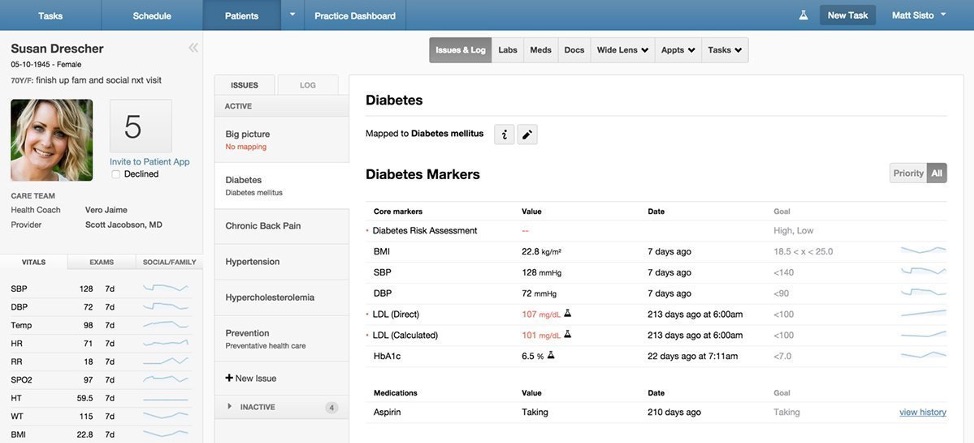
There are several different components of Health IT that add complexity to the system which does not exist in other communication technologies. The central component of Health IT infrastructure is the EHR.[9] These EHRs, or electronic medical records (“EMRs”), contain all of a person’s official health record in a digital format.[10] These digital records can be viewed even when the doctor’s office is closed, providing greater access to a person’s health information.[11] EHRs can also be used to share information between multiple healthcare providers and agencies within the healthcare system.[12] This makes it easier for doctors to share information with specialists and ensure consistent care.[13] Health IT also works outside of the healthcare system with personal health records (“PHRs”). PHRs are self-maintained health records controlled by the patient themself.[14] PHRs can be used to track doctor visits and treatments, as well as activities outside of the doctor’s office.[15] Patients can track their eating and exercise habits, as well as their blood pressure, heartbeat, and other medical parameters.[16] PHRs may even record medications and prescriptions if the PHR is linked to the doctor’s electronic prescribing (“E-prescribing”).[17] E-prescribing connects the doctors directly to the pharmacy, so no paper prescriptions are lost or misread.[18] This gives patients wider access to pharmaceuticals without having to bring paper prescriptions with them.[19]

Developments in Health IT have improved the popularity and access to health records among patients. Smartphones and apps have encouraged patients to use PHRs and have helped patients become more comfortable with their digital health information.[20] Health care providers have also increasingly implemented and used patient portals due to more consumer-friendly designs. Apps and patient portals were clunky and limited near the beginning of Health IT, but modern systems provide more options and customization options.[21] Patient portals used to only provide information of upcoming appointments and perhaps some test results.[22] Now, patient portals are used to download health records, securely communicate with physicians, pay bills, check services, check insurance coverage, and order prescriptions.[23] These Health IT services grant patients more access to and control over their health information and health care treatment.

In addition to individual records, Health IT has established a health information exchange (“HIE”).[24] Health care providers must manage a mountain of patient health information. Thus, there has been a consequential increase in the importance of data analytics.[25] HIEs are systems developed by groups of health care providers to share data between Health IT networks.[26] These shared systems and agreements between health care providers not only allow for better communication and consistent care, but also provide a large database of health information to analyze the health of communities as a whole.[27] Academic researchers can use the shared health information to develop new medical treatments and pharmaceuticals.[28] This plethora of information can be used to manage population health goals and research health trends.[29]

Unfortunately, this amount of information is very difficult to manage, which again increases the reliance on data analytics to find relevant files.[30] This is where other Health IT technologies come in, specifically picture archiving and communication systems (“PACs”) and vendor-neutral archives (“VNAs”). While images have been of most importance to radiologists, other specialties, such as cardiology and neurology, are also producing a large amount of clinical images.[31] PACs and VNAs are widely used to store and manage patient medical images and, in some cases, have even been integrated into shared systems between facilities and health providers.[32] Some Health IT systems even use artificial intelligence (“AI”) to sort and manage files.[33]

In addition to the advantages discussed above, the ability to quickly share accurate information, called “interoperability,” could be the difference between life and death for a patient. Health IT tools improve the necessary cooperation between health care providers for improved patient care and lower healthcare costs.[34] The “interoperability” and rapid information sharing provided by Health IT tools provides health care providers with the most updated information and can even provide patients with immediate access to their health records. Health care providers need personal information and basic medical history, which requires patients to provide repetitive information and paperwork. Interoperability information sharing provides that basic information to health care providers without the excess paperwork and allows for faster treatment. Similarly, health care providers have access to test results from other facilities, which prevents unnecessary tests and improves consistency of treatment. Consistent treatment is further aided by follow up treatment with alerts and reminders for ongoing health conditions, appointments, and medications.[35]

Digital records protect patient information in the event of emergency by allowing recovery of documents, as well as constant access to health records, which can follow patients to any provider, regardless of location. This allows for consistent treatment. The use of electronic systems also provides the ability to encrypt information so only authorized personnel have access. Electronic information can also be tracked to record who accesses the information and when they accessed it. Several of these safety advantages are required by the Federal Government. For example, certified Health IT systems are required to designate professionals and others, to limit access to information, so as to manage care effectively.[36]

Strict government regulations limit Health IT due to the amount of confidential information contained in the health information managed by Health IT.[37] Privacy and security is a top priority for the Federal Government as well as patients and health care providers.[38] Medical records can commonly contain the most intimate details of a patient’s life.[39] These files document physical health, mental health, behavioral issues, family information including child care relationships, and financial status.[40] Health care providers need all of this sensitive information to properly treat patients, but a breach of that information could cause innumerable harms to the patients.[41] Therefore, patients are guaranteed clearly defined rights to the privacy of their health information, including electronic health information.[42]

Health care and technology touch on every aspect of our lives. Ever since the computer was invented, various methods have been implemented to improve the efficiency and access of health care incorporation.[43] From EHRs to electronic prescriptions, Health IT has been connecting vital information for patients and health care providers.[44] There are still some issues and miscommunications within the systems, but Health IT will improve as technology improves, providing crucial information and technical support to the health care industry.

[1] Ashley Brooks, What Is Health Information Technology? Exploring the Cutting Edge of Our Healthcare System, Rasmussen C. Health Sci. Blog (June 10, 2019), https://www.rasmussen.edu/degrees/health-sciences/blog/what-is-health-information-technology/ (quoting Patrick Gauthier, director of healthcare solutions at Advocates for Human Potential, Inc.).

[2] Health Information Technology Integration, Agency for Healthcare Research and Quality, https://www.ahrq.gov/ncepcr/tools/health-it/index.html (last visited Apr. 15, 2020).

[3] See id.

[4] See id.

[5] See Department of Health and Human Services, Health Information Technology, Health Information Privacy, https://www.hhs.gov/hipaa/for-professionals/special-topics/health-information-technology/index.html (last visited Apr. 15, 2020).

[6] See Brooks, supra note 1.

[7] See id.

[8] See id.

[9] See Margaret Rouse, Health IT (health information technology), SearchHealthIT (June 2018), https://searchhealthit.techtarget.com/definition/Health-IT-information-technology.

[10] See id.

[11] See Office of the National Coordinator for Health Information Technology, Health IT: Advancing America’s Health Care, https://www.healthit.gov/sites/defaultpdf/health-information-technology-fact-sheet.pdf (last visited Apr. 15, 2020) [hereinafter “ONC”].

[12] See Rouse, supra note 9.

[13] See ONC, supra note 11.

[14] See Rouse, supra note 9.

[15] See ONC, supra note 11.

[16] See id.

[17] See id.

[18] See id.

[19] See id.

[20] See Rouse, supra note 9.

[21] See id.

[22] See id.

[23] See id.

[24] See id.

[25] See Rouse, supra note 9.

[26] See id.

[27] See id.

[28] See id.

[29] See id.

[30] See Rouse, supra note 9.

[31] See id.

[32] See id.

[33] See id.

[34] See Brooks, supra note 1.

[35] See ONC, supra note 11.

[36] See id.

[37] See Brooks, supra note 1.

[38] See ONC, supra note 11.

[39] See Institute of Medicine, Beyond the HIPAA Privacy Rule: Enhancing Privacy, Improving Health Through Research (Laura A. Levit & Lawrence O. Gostin eds., 2009).

[40] See id.

[41] See id.

[42] See ONC, supra note 11.

[43] See The History of Healthcare Technology and the Evolution of EHR, VertitechIT (Mar. 11, 2018), https://www.vertitechit.com/history-healthcare-technology/.

[44] See id.

Will the Real Coronavirus Patient Please Stand Up?

By: Cam Kollar

Firemen picture.jpg

While on quarantine, some people are currently bored while others are baking bread. As a law student, my quarantine days are spent eating, reading, and writing. Rinse, wash, repeat. The world has been on quarantine for about two months going on five years. A little over a month ago, a young man was of the mind to conduct his own social experiment on Facebook.[1] The goal of his social experiment was simple, he wanted to prove how important it was for people to be educated and do their own research before assuming everything they read or hear is true.[2] But the way that he went about it was to draft a Facebook post telling his family and friends that he had tested positive for coronavirus.[3] In his post he also stated that the doctors had told him that the virus was now airborne.[4] The problem was that he had made the whole thing up.[5]

Although we have the right of free speech, it is not without limits.[6] As the Court explained in Schenck, “[t]he most stringent protection of free speech would not protect a man in falsely shouting fire in a theatre and causing a panic.” Although this is a common statement that is often repeated, it no longer carries the same impact it did when it was first used.[7] During the preceding time period when the Schenck opinion was written, there were some significant theater fires, notably the 1903 Iroquois Theater fire in Chicago.[8] The devastating fire resulted in more than 600 dead, due to flames, smoke, and being trampled during the massive panic to escape the building.[9] When the Schenck court incorporated the rhetorical device in their opinion, it evoked strong imagery and powerful emotions.[10] Until the quarantine, the modern day equivalent analogy would have been ‘you don’t shout he has got a gun at a school.’[11]

Few things come to mind that are able to cause mass hysteria, but I vividly remember the time shortly after September 11, 2001, when the fear of anthrax laden mail gripped the public’s attention.[12] The anthrax attacks of 2001 and 2002 used anthrax spores enclosed in mailing envelopes and were mailed to several news agencies and then in a second round, mailed anthrax envelopes to a pair of senators.[13] Extremely dangerous, inhalation of those anthrax spores was 90 % fatal unless the victim is treated immediately with massive doses of antibiotics.[14] Untreated, death can occur within three to twenty-four hours, even from extremely low quantities of exposure.[15] Significantly contributing to the widespread fear, some experts estimated that a single gram of effectively distributed anthrax could kill more than one-third of the U.S. population.[16] Ultimately from these mailings, 22 people were sick with anthrax and five died.[17] In the midst of the legitimate anthrax attacks, adding to the paranoia were the fake attacks where envelopes filled with flour, sugar, cornstarch, Tylenol, sand, talcum powder, body deodorant, or even parmesan cheese were sent in the mail.[18] In fact, more than 15,000 anthrax hoaxes were made nationwide between September 2001 and August 2002.[19] In response to these threats, large volumes of mail were put into quarantine by the U.S. Postal Service.[20]

No matter the year, there are always dangers that can cause mass panic. As a result, some states have laws to protect the public from themselves. Texas is one such state. In Texas, there is a criminal law which penalizes the false alarm or report if someone knowingly initiates, communicates, or circulates a report of a past, present, or future offense or other emergency that he knows is false or baseless and that would ordinarily cause action by an official or volunteer agency organized to deal with emergencies, place a person in fear of imminent serious bodily injury, or prevent or interrupt the occupation of a place to which the public has access.[21] The Facebook post that the young man drafted, spread quickly across the county where he resided, with anxious people calling the local hospital.[22]

The social experiment may have been about trying to teach a lesson in not always believing what you read online[23], but instead it became a lesson in responsible behavior. While none are appropriate behavior, unlike yelling fire when there isn’t one or sending fake anthrax spores, covid-19 is a virus-something that you can’t see without a microscope. The lies about the virus’s capabilities, especially in these times, irresponsibly impacts hospital resources that are already heavily taxed. Furthermore, unlike most other social experiments, people did not realize they were being tested on, and the lies spread with no way to contain the “experiment.” The young man has been charged with the offense of False Alarm or Report.[24] We may have a right to say almost anything, but that privilege is not without responsible limits.

Using the best analogy to explain first amendment limitations: in 1919, “You don’t scream fire in a crowded theater;” in 2018, “You don’t scream he has a gun, in a school;” in 2020, “You don’t lie about Covid-19 airborne transmissions for social experiments on social media.”

[1] Joe Tidy, Coronavirus: ‘I Faked Having Covid-19 on Facebook and Got Arrested’, BBC (Apr. 24, 2020), https://www.bbc.com/news/technology-52397294.

[2] Id.

[3] Id.

[4] Id.

[5] Id.

[6] E.g., Schenck v. United States, 249 U.S. 47, 52 (1919).

[7] See Fire in a Crowded Theater, Legal Talk Network (June 28, 2018), https://legaltalknetwork.com/podcasts/make-no-law/2018/06/fire-in-a-crowded-theater (explaining the common catchphrase as ‘You can’t yell fire in a crowded theater’).

[8] See id.

[9] See id.

[10] See id.

[11] See Legal Talk Network, supra note 7.

[12] See Jackson Landers, The Anthrax Letters That Terrorized a Nation Are Now Decontaminated and on Public View, Smithsonian Mag. (Sept. 12, 2016), https://www.smithsonianmag.com/smithsonian-institution/anthrax-letters-terrorized-nation-now-decontaminated-public-view-180960407.

[13] See id. (describing the anthrax spores in these anthrax envelopes as looking like baby powder).

[14] See Ira P. Robbins, Anthrax Hoaxes, 54 Am. U.L. Rev. 1, 5 (2004).

[15] See id.

[16] See id.

[17] See Landers, supra note 12.

[18] See Robbins, supra note 14 at 4.

[19] See Ira P. Robbins, Anthrax Hoaxes, 54 Am. U.L. Rev. 1, 3-4 (2004).

[20] See Landers, supra note 12.

[21] See Tex. Penal Code Ann. § 42.06 (West 2019).

[22] See Tidy, supra note 1.

[23] See id.

[24] See id.

image source: https://www.gutenberg.org39280/39280-h/39280-h.htm

Courts Across America Adapt and Respond to COVID-19

[et_pb_section fb_built=”1″ admin_label=”section” _builder_version=”3.22″][et_pb_row admin_label=”row” _builder_version=”3.25″ background_size=”initial” background_position=”top_left” background_repeat=”repeat”][et_pb_column type=”4_4″ _builder_version=”3.25″ custom_padding=”|||” custom_padding__hover=”|||”][et_pb_text admin_label=”Text” _builder_version=”3.27.4″ background_size=”initial” background_position=”top_left” background_repeat=”repeat”]

By: Derek Reigle


The COVID-19 pandemic has resulted in extraordinary changes across America and the world. This phenomena has not escaped the American legal system. Last week, the Supreme Court announced that it will begin hearing cases via teleconference, a first for the court.[1] The Supreme Court is not alone in its changes. Indeed, all over America, courts have moved hearings online, which are conducted through video teleconference software programs like Zoom.[2]

States have responded to these new online courts in interesting ways. In Texas, there are guidelines on how to dress and present oneself on Zoom in Court.[3] This makes sense because some attorneys are appearing online while still in bed, leading to judicial reprimands.[4] Further problems also have emerged. Some court hearings have even been hacked into—online trolls “zoom bombing” a court proceeding in order to disrupt the process.[5] As a result of “zoombombing,” federal prosecutors are now issuing warnings that declare intruding into uninvited zoom calls is a felony.[6]

Issues beyond just the logistical impact of online court proceedings have also developed. Some of these substantive concerns will inevitably lead to several interesting and complicated constitutional questions. One of the concerns raised by criminal defense counsels is already being argued in some state courts. They argue that the video examination of witnesses during criminal trials does not fulfill the confrontation requirement enumerated in our Constitution.[7]  Another issue is the right to a speedy trial. Cases are being pushed back to June and July across the country,[8] but what if the pandemic continues to linger? The result of these complicated legal questions could determine the future plans that are put in place for the next potential pandemic.

As of now, the extent and length of the pandemic is unknown. However, several additional changes are already permanently altering the legal landscape. Some of these changes could be beneficial in the long run for judges. Confrontation Clause issues aside, many courtroom procedures that require face to face interaction could be moved online.[9] This could help provide some transitional juice to an antiquated profession. Think about it: lawyers could handle cases further away, access to courts could be increased because people could call in remotely, and judicial efficiency could be increased as a result.

Another positive of this situation is that some prisoners who are eligible for parole are now being released in greater numbers.[10]  This is due to fears of the coronavirus spreading throughout our prisons and infecting prisoners.[11]America has highest number of incarcerated persons in the world,[12] and reducing those numbers through the release of non-violent offenders would be a great thing.

Ultimately, the next few months and, potentially, years will bring about a significant amount of changes in the way Court is conducted, both in person and online. There will also be changes in how we handle our vulnerable prison population.  All of this will lead to several interesting constitutional questions. Hopefully, we can take note of all of these noteworthy changes and implement the unexpected positives from a terrible situation.

[1] See Pete Williams, In Historic First, Supreme Court to Hear Arguments by Phone, NBC News (Apr. 20, 2020), https://www.nbcnews.com/politics/supreme-court/historic-first-supreme-court-hear-arguments-phone-n1182681.

[2] See Aaron Holmes, Courts and Government Meetings Have Fallen into Chaos After Moving Hearings to Zoom and Getting Swarmed With Nudity and Offensive Remarks, Business Insider (Apr. 20, 2020), https://www.businessinsider.com/zoom-courts-governments-struggle-to-adapt-video-tools-hearings-public-2020-4.

[3] See Electronic Hearings with Zoom, Texas Judicial Branch, https://www.txcourts.gov/programs-services/electronic-hearings-with-zoom/.

[4] See Danielle Wallace, Florida Judge Urges Lawyers to Get Out of Bed and Get Dressed for Zoom Court Cases, Fox News (Apr. 15, 2020), https://www.foxnews.com/us/florida-coronavirus-judge-lawyers-zoom-shirtless-bed-poolside-dressed.

[5] See Nick Statt,’Zoombombing’ is a Federal Offense That Could Result in Imprisonment, Prosecutors Warn, The Verge (Apr. 3, 2020), https://www.theverge.com/2020/4/3/21207260/zoombombing-crime-zoom-video-conference-hacking-pranks-doj-fbi.

[6] See id.

[7] See Interview with Hon. Anne Hartnett, Judge, Court of Common Pleas of The State of Delaware, in Dover, Del. (Apr. 21, 2020).

[8] See id.

[9] See id.

[10] See Iowa to Release Prisoners to Minimize Spread of COVID-19, KCCI (Apr. 20, 2020), https://www.kcci.com/article/iowa-to-release-prisoners-to-minimize-spread-of-covid-19/32216621.

[11] See id.

[12] See Drew Kann, 5 facts behind America’s High Incarceration Rate, CNN (Apr. 21, 2019), https://www.cnn.com/2018/06/28/us/mass-incarceratio.n-five-key-facts/index.html.

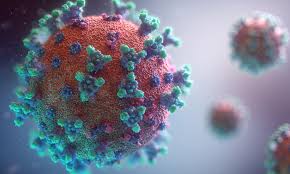
Image Source: https://www.drugtargetreview.com/news/57287/3d-visualisation-of-covid-19-surface-released-for-researchers/

[/et_pb_text][/et_pb_column][/et_pb_row][/et_pb_section]

Zooming Back? Analyzing the Financial Market Amidst Global Pandemic

By: Patrick Macher

empty times square new york This Picture of Times Square Says It All

The Bad:


“We have it totally under control. It’s one person coming in from China, and we have it under control. It’s going to be just fine,” President Donald Trump reassured the public on January 22, 2020.[1] At the time, COVID-19 seemed like an other-worldly issue, but less than fifty days later, the United States got a taste of the impact the rest of the world had already learned to fear.[2] On March 09, 2020, the largest point plunge in history for the Dow Jones Industrial Average tore through the hopes of bullish traders as the reality of the inevitable spread of coronavirus set in and dropping oil prices foreshadowed the looming recession.[3] The Dow dropped so fast that the point loss triggered a “circuit breaker,” which is a fifteen minute automatic trade halt after a 7% loss.[4] The stock market turned bearish falling over 20% from the recent highs.[5] The Dow hit its March low on the 16th as it traded for a measly $22.00, a far cry from the $48.76 it was trading for a month prior.[6] In 8 calendar days COVID-19 flipped the Dow Jones, a blue-chip market index, on its head and sent American investors straight into self-quarantine.


The Worse:


The unemployment rate is a lagging recession indicator, meaning that once it starts to drop, the economy is already amidst the recession.[7] The U.S. unemployment rate jumped to 4.4% in March as the number of unemployed went from 1.35 million to over 7 million in the span of a few weeks.[8] The rate is projected to rise in April as March’s numbers stem from a mid-March, largely pre-quarantine, survey.[9] Unemployment numbers demonstrate household economic risk, but perhaps equally important is the real economy of credit, which drives the commercial economy.[10] As the financial system faces shock, liquidity problems hamper credit investment lines, which damage capital formation and ultimately growth.[11] The ugly end result is a crippled commercial sector with a damaged household profile unable to spend companies out of the recession, ultimately paralyzing any prospect of economic growth.[12]


The Hopeful?


It would be great to say the economy is going to bounce right back to pre-quarantine highs once the fear of coronavirus subsides, but there are simply too many uncertainties and unknowns.[13] The government has feverishly fought to combat the recession with drastic rate cuts and the largest financial emergency stimulus package in history.[14] On March 15, the Federal Reserve cut lending rates to virtually zero in an attempt to mitigate the damage to the economy and encourage credit lending.[15] On March 27, President Trump signed a historic $2 trillion legislation aimed at helping American workers, small businesses, and industries grappling with the economic disruption, such as the utterly halted airline industry.[16] Dow investors seem to be optimistic to the influx of household capital and lowered credit rates as it has climbed to the $36.56 mark just less than a month after its historic $22.00 low.[17] Opportunistic investors are hawking to take advantage of a historically low market and this may be falsely stabilizing the economy.[18] Unfortunately for most investors and the U.S. economy, uncertainty and unknown run rampant in this unprecedented global pandemic.[19] The most important unknown is the most obvious: the course of the virus.[20] If the virus is successfully controlled and economic restrictions are lifted in the next month, experts predict the economy could bounce back within the first half of the year.[21] However, if the virus is not contained and the economy must endure the effects of social distancing through the course of the summer, McKinsey consultants predict that it could take up to two years for the GDP to recover.[22]

[1] See Linda Qiu et al., The President vs. the Experts: How Trump Played Down the Coronavirus, N.Y. Times (Mar. 18, 2020), https://www.nytimes.com/interactive/2020/03/18/us/trump-coronavirus-statements-timeline.html?smtyp=cur&smid=tw-nytimes.


[2] See Kimberly Amadeo, How Does the 2020 Stock Market Crash Compare with Others? the balance (Mar. 17, 2020), https://www.thebalance.com/fundamentals-of-the-2020-market-crash-4799950.


[3] See id.


[4] See Yun Li, Plungiung Stocks Triggered a Key Market ‘Circuit Breaker’ –Here’s What That Means, CNBC (Mar. 16, 2020, 4:06 PM), https://www.cnbc.com/2020/03/15/the-sp-500-futures-hit-limit-down-at-5-percent.html


[5] See id.


[6] See Dow Inc., Yahoo Finance (Apr. 12, 2020, 9:53 PM), https://finance.yahoo.com/quote/Dow


[7] See Kimberly Amadeo, Unemployment Rate, Effect, and Trends: Why Every Jobless Person is Not Counted as Unemployed, the balance (May 06, 2019) https://www.thebalance.com/unemployment-rate-3305744


[8] See United States Unemployment Rate, Trading Economics, https://tradingeconomics.com/united-states/unemployment-rate (last visited Apr. 13, 2020).


[9] See id.


[10] See Carlsson-Szlezak et al., Understanding the Economic Shock of Coronavirus, Harvard Business Review (Mar. 27, 2020), https://hbr.org/2020/03/understanding-the-economic-shock-of-coronavirus


[11] See id.


[12] See id.


[13] See Annalyn Kurtz, How Quickly Can the U.S. Economy Bounce Back? That Depends on the Virus, Cnn Business (Apr. 02, 2020, 6:23 AM), https://www.cnn.com/2020/04/02/economy/recession-how-long-will-it-be/index.html


[14] See Foran et al., Trump Signs Historic $2 Trillion Stimulus After Congress Passes It Friday, Cnn Politics (Mar. 27, 2020, 7:00 PM), https://www.cnn.com/2020/03/27/politics/coronavirus-stimulus-house-vote/index.html


[15] See James Royal, Winners and Losers From the Fed’s Emergency Rate Cut, Bankrate (Mar. 15, 2020), https://www.bankrate.com/banking/federal-reserve/interest-rate-decrease-winners-losers/


[16] See Foran et al., supra note 15.


[17] See Dow Inc., supra note 7.


[18] See Klein et al., COVID-19 and Shareholder Activism–The Impact, Harvard Law School Forum on Corporate Governance (Mar. 31, 2020), https://corpgov.law.harvard.edu/2020/03/31/covid-19-and-shareholder-activism-the-impact/


[19] See Kurtz, supra note 14.


[20] See id.


[21] See id.


[22] See id.


image source: https://twistedsifter.com/2020/03/empty-times-square-covid/

TikTok: Internet Fad, or Objectively Bad?

By: Sheridan Maxey

Since the emergence of the internet, fads have come and gone in waves. Today the most widely known internet fad is TikTok. Just a few years ago, before Tike Tok, the platform known as Vine was widely popular among younger individuals.[1] On Vine, many individuals would post comedic videos, post their rants, or just talk to their fans.[2] In 2017, Twitter pulled the plug on Vine opting to convert it into a camera app; this rendered the original Vine app as an archive for the old videos that were posted.[3] A China based app which was previously known as Musical.ly was changed to TikTok in 2018.[4] This began TikTok’s rise to notoriety, becoming one of the top downloaded apps in the Apple and Google Play stores.[5] One can argue that the popularity of Vine helped pave the way for TikTok to become such a hit with the masses. Vine, being as popular as it was, did not go without its own issues though. Originally, Vine had a virtually unfiltered search engine which allowed users, underage and of the age of majority, to hardcore pornographic videos with just a few choice keywords.[6] This issue caused one explicit video to be labeled an “Editors Pick” on the app, which was quickly removed.[7] Similarly, TikTok’s ascension to fame has not come without some scrutiny.

TikTok has had its share of legal troubles around the world, one notably in India where the Ministry of Electronics and Information Technology banned TikTok from the Apple and Google Play stores, asserting that the platform was promoting pornography and illicit content.[8] Additionally, back in 2019, the United States’ Federal Trade Commission levied a $5.7 million fine on TikTok for illegally collecting personal information of children under age thirteen.[9] The fine was coupled with a requirement that TikTok remove all videos created by children under thirteen.[10] Both the United States Army and Navy have also been prohibited from using TikTok due to rising security concerns.[11] Some of the lawmakers argued that TikTok’s parent company, ByteDance, may be forced to relay intelligence to the Chinese Communist Party.[12] In November 2019, TikTok refused to speak with a congressional committee about the service’s relationship with China.[13] Instead, the company stated that it did not store the information obtained from the United States in China, and that the TikTok data was not subject to Chinese law.[14] TikTok’s denial of appearing before a congressional panel and its light reassurance cause more concerns over the service and whether its privacy policies are adequate.[15] As of now, there have not been any reports of TikTok’s stored data being sold or relayed to China or other nations. However, it is beginning to appear that people are more worried about this China-based internet fad than its predecessor. Perhaps actions like the fines from the FTC and the ban from Indian app stores will be enough to dissuade TikTok from eventually using its service maliciously, or perhaps TikTok will fade away similarly to how Vine did. Only the tick-tock of the clock can tell.

[1] See Jim Tobin, What is TikTok’s Shelf Life, Considering Vine Withered And Died?, Forbes (Feb. 10, 2020), https://www.forbes.com/sites/forbesagencycouncil/2020/02/10/what-is-tiktoks-shelf-life-considering-vine-withered-and-died/#5c135a2d4a86 (stating that Vine was the popular platform for young people before TikTok).

[2] See Casey Newton, Why Vine Died, The Verge (Oct. 28, 2016), https://www.theverge.com/2016/10/28/13456208/why-vine-died-twitter-shutdown (detailing the numerous uses for the service).

[3] See Janko Roettgers, It’s Official: Twitter Has Shut Down Vine, Variety (Jan 17, 2017), https://variety.com/2017/digital/news/twitter-vine-shut-down-1201961620/ (highlighting Twitter’s shutting down of the previous Vine app).

[4] See Dami Lee, The Popular Musical.ly App Has Been Rebranded As TikTok, The Verge (Aug. 2, 2018), https://www.theverge.com/2018/8/2/17644260/musically-rebrand-tiktok-bytedance-douyin (noting that Musical.ly became TikTok on August 2, 2018).

[5] See Usman Qureshi, TikTok, ZOOM Top the List of World’s Most Downloaded Apps in March 2020, iPhone in Canada (Apr. 8, 2020), https://www.iphoneincanada.ca/news/tiktok-zoom-most-downloaded-apps-2020/.

[6] See Garett Sloane, Porn Problem for Twitter’s Vine App, New York Post (Jan. 29, 2013), https://nypost.com/2013/01/29/porn-problem-for-twitters-vine-app/ (stating that a simple search of the keyword “#porn” resulted in pornographic videos).

[7] Id.

[8] See Ingrid Lunden, TikTok Downloads Ordered to be Blocked On iOS and Android in India Over Porn and Other Illegal Content, TechCrunch (Apr. 16, 2019), https://techcrunch.com/2019/04/16/tiktok-india/.

[9] See Sherisse Pham, TikTok Hit With Record Fine for Collecting Data On Children, CNN Business (Feb. 28, 2019), https://www.cnn.com/2019/02/28/tech/tiktok-ftc-fine-children/index.html (detailing the fine that TikTok was made to pay).

[10] See Todd Spangler, TikTok to Pay Record $5.7 Million FTC Fine for Alleged Violations of Children’s Privacy Law, Variety (Feb. 27, 2019), https://variety.com/2019/digital/news/tiktok-musically-ftc-fine-violating-child-privacy-law-1203151078/ (stating that TikTok must comply with the Children’s Online Privacy Protection Act).

[11] See Nicole Gaouette and Ryan Browne, US Army Bans Soldiers Drom Using TikTok Over Securuty Worries, CNN Politics (Dec. 30, 2019), https://www.cnn.com/2019/12/30/politics/army-tiktok-banned/index.html (stating that the Army, Navy, and lawmakers were concerned about the security risks of using TikTok).

[12] Id.

[13] Id.

[14] Id.

[15] Id.


Virginia Gambling: Legalization Creating Clarity

By: Jacob Newton

Playing casino style slot machines in Virginia may soon become a reality. House Bill 4 Lottery Board; regulation of casino gaming (the “Bill”), proposes an amendment to the Code of Virginia, which would expand gambling and gaming rights throughout the Commonwealth to include classic slot machine casino gambling.[1] The Bill will give the power to grant gambling to localities and Virginians across the Commonwealth will get the chance to vote if they want casino gambling inside local communities.[2] The Bill is still subject to the Governor’s approval, but Virginia lawmakers have given approval to the Bill to allow voters in Bristol, Danville, Richmond, Norfolk and Portsmouth to hold local referendums later this year to approve casinos.[3] The Governor has until 11:59 p.m., April 11, 2020 to take action on the Bill.[4]

Lawmakers are conflicted by the desire to keep the revenue of Virginian gamblers inside the state’s economy,[5] and the negative morality associated with gambling. Due to this conflict, they have been continuously making exceptions to Virginia Code § 18.2-326, the statute penalizing illegal gambling.[6] Even though lawmakers have been making exceptions to the general rule against gambling, they have been reluctant to legalize the most common type of gambling, the casino style slot machine[7]

Gambling machines that look and operate similar to the classic casino style slot machine are common within Virginia, even though the casino style slot machine is currently illegal in within the state’s borders.[8] The legality of these casino-like slot machines are possible because the exceptions to Virginia Code § 18.2-326 have been expanded or exploited to make the machines fit under specific exceptions.[9] The advancement of technology has transformed the gambling industry and created gray areas in need of defining.[10] One prevalent example of these exceptions to Virginia Code § 18.2-326 is Va. Code Ann.§ 18.2-340.15 (the charitable gaming exception).

The charitable gaming exception was legalized in 1973, making it the earliest exception to the criminality imposed upon gambling in Virginia.[11] It provides charitable gaming shall be permitted in the Commonwealth as a means of funding qualified organizations.[12] A qualified “organization” is defined by the statute as a volunteer emergency services organization operated exclusively for religious, charitable, community or educational purposes; athletic association or booster club; veterans; fraternal association or corporation operating under the lodge system; local chamber of commerce; or any other nonprofit organization that raises funds by conducting raffles that generate annual gross receipts of $40,000 or less, provided such gross receipts from the raffle, less expenses and prizes, are used exclusively for charitable, educational, religious or community purposes.[13] The list of qualified organizations is implicitly an exhaustive list meant to target specific types of organizations.

The types of gambling allowed under the exception permits qualified organizations to conduct raffles, bingo, network bingo, and instant bingo games.[14] Instant bingo closely resembles the classic slot machine and is provided for by statute.[15] Electronic pull-tabs are an electronic version of a single instant bingo card or pull-tab. The electronic pull-tab is a predetermined game outcome in electronic form, distributed on-demand from a finite number of game outcomes by a distributed pull-tab system.[16] The specifics of the machines are highly regulated by the charitable gaming board, but the machines still resemble a slightly watered down version of a classic slot machine because they operate at the press of a button and display symbols in the form of a crisscross.[17]

Some companies are charging potential gamblers a nominal lifetime membership fee to use the electronic pull tab machines and claiming to fall under the lodge system definition of qualifying organizations.[18] Specific companies are not listed because they do not advertise this on any platform. Companies using this method have essentially placed themselves in this category already carved out by the charitable gaming statute, and the Charitable Gaming Board has yet to condemn or approve this method. This is just one example of a gray area surrounding the legal boundaries of gambling in Virginia.

The legislative trend is moving toward complete legalization of casino slot style gambling in Virginia. However, “dancing” around compete legalization puts stress on local government and law enforcement to maintain the gray boundaries of the expanding amount of exceptions. If the Governor signs House Bill 4 Lottery Board; regulation of casino gaming, then Virginia will be one step closer to alleviating the pressure of maintaining those boundaries.

[1] Va H.R. 4, 1127 Leg. Session (2020).

[2] See id.

[3] See Associate Press, Virginia to expand gambling options, legalize casinos, WHSV 3 (Mar. 08, 2020, 4:48 PM), https://www.whsv.com/content/news/Virginia-to-expand-gambling-options-legalize-casinos-568611311.html

[4] See HB 4 Lottery Board; regulation and control of casino gaming, Virginia’s Legislative Information System (last visited Oct. 6, 2008), https://lis.virginia.gov/cgi-bin/legp604.exe?201+sum+HB4.

[5] See Gregory S. Schneider, ‘Boring’ no more? Virginia has already begun embracing casino-style gaming, Wash. Post (July 7, 2019, 1:00 PM), https://www.washingtonpost.com/local/virginia-news/boring-no-more-virginia-has-already-begun-embracing-casino-style-gaming/2019/07/07/79477f62-9db1-11e9-85d6-5211733f92c7_story.html.

[6] See Va. Code Ann.§ 18.2-340.15; Va. Code Ann.§ 18.2-334.3; Va. Code Ann.§ 59.1-364.

[7] Riverboat Gaming Commission with riverboat gaming, Va H.R. 2400, 1110 Leg. Session (1995).

[8] See generally House Bill 1609 (describing the functions of the historic horse racing machines); 11 Va. Admin. Code § 15-40-410 (2019) (describing electronic pull-tab bingo).

[9] See Va. Code Ann.§ 18.2-340.15; Va. Code Ann.§ 18.2-334.3; Va. Code Ann.§ 59.1-364.

[10] See IN THIS ISSUE: CULTURAL PRODUCTION IN A DIGITAL AGE: Digital Gambling: The Coincidence of Desire and Design, 597 Annals 65.

[11] See Va. Code Ann.§ 18.2-340.15.

[12] See id.

[13] See Va. Code Ann.§ 18.2-340.16.

[14] See Va. Code Ann.§ 18.2-340.22.

[15] See id.

[16] See 11 Va. Admin. Code § 15-40-410 (2019).

[17] See id.

[18] See Va. Code Ann.§ 18.2-340.16.

image source: https://thesportsdaily.com/2019/06/04/free-slot-machine-games/

Strong AI Will Necessitate UBI

By: Ryan Leonard

Artificial intelligence (AI) is a buzz-phrase of sorts that refers to at least two classifications of computational technology.[1]  First, there is weak AI, which refers to the a computer system (broadly defined) with the ability to perform a specific task, better (more accurately, more efficiently, etc., depending on the task) than its human counterparts.[2]  For example, in 1997, a program was developed that could defeat the world’s best chess players in a game of chess.[3]  In 2016, Tesla Motor Company unveiled cars capable of driving more safely than their human counterparts.[4]


The second broad category of AI is strong AI, which refers to a not-yet-existent technology that is capable of performing all tasks better than its human counterparts.[5]  Because of the rate of advancement in computational technology,[6] strong AI is likely to be developed unless humanity is destroyed, or severely incapacitated, first.[7]


Strong AI has the potential to have a snowball effect because, logically, it would be able to build more sophisticated AI than humans were able to build in the first place.[8]  The AI that was built by AI would itself be able to produce a superior version of itself, ad infinitum.  Putting aside spooky hypotheses that such advancement would leave humanity at the mercy of its robot overlords, there is still the issue of how the US economy, or any economy for that matter, would operate.


Weak AI alone is already, at least for the time being, a threat to certain low-skill jobs.[9]  Truck drivers, toll booth operators, among others, can, and to some extent, already have seen their jobs taken over by machines.[10]  Strong AI poses a threat not just to low-skill repetitive jobs, but to highly complex jobs as well.[11]  Therefore, in theory, strong AI would be able to produce engineers, surgeons, and programmers with skills far superior to any human that has every lived.  In a world in which computer-powered machines can do everything better than humans, there would not be a single job that a human would be better suited to perform than a computer (by definition).  And yet, with machines doing the farming, the building, the transporting, the diagnosing, etc., there would be no shortage of goods or services.  In a world of perfect abundance, but 100% unemployment, Congress will need to change all currently existing laws relating to social programs and supplant them with new legislation establishing a universal basic income (UBI).


UBI, if implemented, would be a program that would send a specified amount of money to all citizens and permanent residents in regular intervals.[12]  In contemporary politics, UBI, as recently popularized by former presidential candidate Andrew Yang, would set that specified amount at $1,000 per month for every adult.[13]  In a world with strong AI, Congress would need to consider an amount far higher, as the amount would need to be an income that could be entirely relied upon by everyone.  Among many serious scientists, the emergence of strong AI is considered a viable possibility, if not a certainty.[14]  Congress should begin considering the appropriate legal framework for keeping a functioning economy in place.


[1] See Kathleen Walch, Rethinking Weak vs. Strong AI, Forbes (Oct. 4, 2019, 6:30 AM), https://www.forbes.com/sites/cognitiveworld/2019/10/04/rethinking-weak-vs-strong-ai/#740863696da3.

[2] See id.

[3] See Samuel Gibbs, AlphaZero AI Beats Champion Chess Program After Teaching Itself in Four Hours, Guardian (Dec. 7, 2017, 7:41 AM), https://www.theguardian.com/technology/2017/dec/07/alphazero-google-deepmind-ai-beats-champion-program-teaching-itself-to-play-four-hours.

[4] See Marco della Cava, Tesla Announces Fully Self-Driving Cars, USA Today (Oct. 19, 2016, 8:05 PM), https://www.usatoday.com/story/tech/news/2016/10/19/tesla-announces-fully-self-driving-fleet/92430638/.

[5] See Walch, supra note 1.

[6] See David Chandler, How to Predict the Progress of Technology, MIT (March 6, 2013), http://news.mit.edu/2013/how-to-predict-the-progress-of-technology-0306.

[7] See Sam Harris, Can We Avoid Digital Apocalypse?, Sam Harris (Jan. 16, 2015), https://samharris.org/can-we-avoid-a-digital-apocalypse/.

[8] See Kelsey Piper, Why Elon Musk Fears Artificial Intelligence, Vox (Nov. 2, 2018, 12:10 PM), https://www.vox.com/future-perfect/2018/11/2/18053418/elon-musk-artificial-intelligence-google-deepmind-openai.

[9] See Gwen Moran, Your Job Will Be Automated – Here’s How to Figure Out When AI Could Take Over, Fortune (Aug. 1, 2019, 6:00 AM), https://fortune.com/2019/08/01/predicting-job-automation-ai/.

[10] See id.

[11] See Harris, supra note 7.

[12] See Abby Vesoulis, This Presidential Candidate Wants to Give Every Adult $1,000 a Month, Time (Feb. 13, 2019), https://time.com/5528621/andrew-yang-universal-basic-income/.

[13] See id.

[14] See Piper, supra note 7.

image source: https://assetsds.cdnedge.bluemix.net/sites/defaultstyles/very_big_2/public/news/images/universal_basic_income2.jpg?itok=kjhwIDi4

Page 38 of 79

Powered by WordPress & Theme by Anders Norén