
The first exclusively online law review.

Tag: Data Centers

Zoning Categorizations with the Rapid Expansion of Data Centers

Zoning Categorizations with the Rapid Expansion of Data Centers

By: Jack Brestel

Over the past couple of years, many municipalities have grappled with the possibilities surrounding data centers that have risen due to the rapid transformation of technological operations. Among the many considerations a data center must make when determining a build location, land acquisition and zoning are at the top of the list as well as being the most controversial issues with the public.[1] With the growing need for large companies to house their data, cloud farms, and artificial intelligence outside of the main office—mainly to accommodate vast amounts of information—building data centers has been the main solution, especially in areas where noise concerns, energy consumption, and building height regulations are favorable.[2] Further, companies often run into issues with excessive water or energy consumption and have to solve them with the municipalities themselves.[3] With local law attempting to keep up with the expansion of these centers, zoning issues commonly arise.
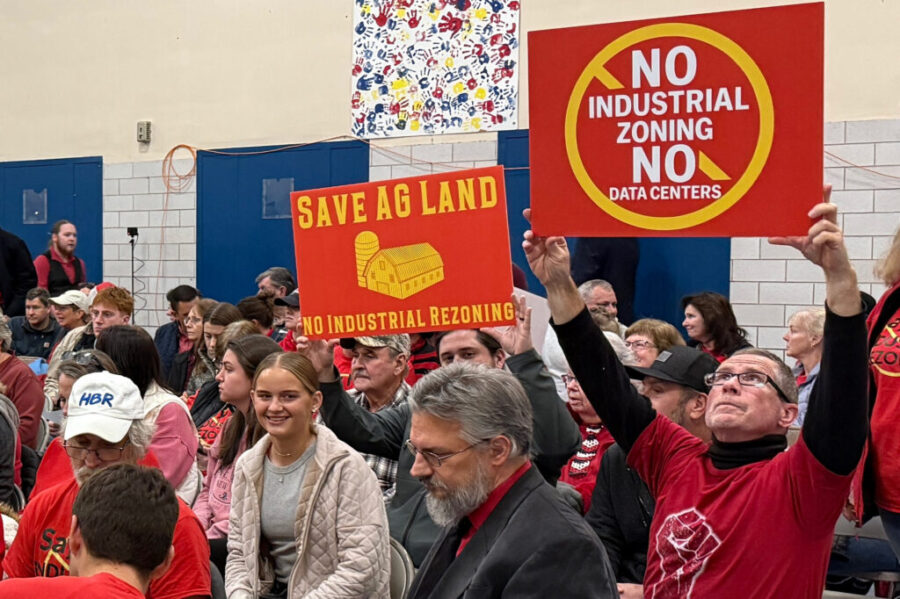
Local Zoning and Environmental Protections: Local Communities Best Defense Against Data Centers

Local Zoning and Environmental Protections: Local Communities Best Defense Against Data Centers

By: Michael Bartz

With the mass proliferation and investment in artificial intelligence, data centers are being built to keep up with ever-increasing resource requirements. The AI market is growing at roughly 40% per year and is expected to be a $1 trillion industry in 2032.[1] By 2030, global investment in data centers will amount to roughly $7 trillion, with more than 40% of the total investment being in the United States.[2] However, development of data centers across the United States is not geographically uniform. Roughly 60% of domestic data centers are in just ten states, with Virginia, Texas, and California being the most concentrated.[3] Large data centers are often built in rural communities where they can receive substantial tax breaks.[4]

Powered by WordPress & Theme by Anders Norén