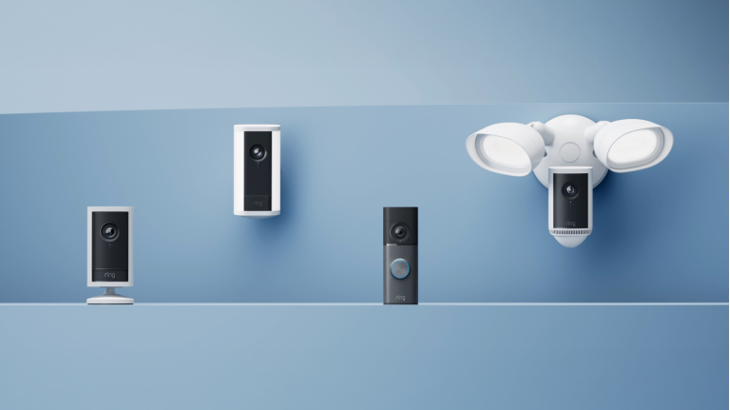
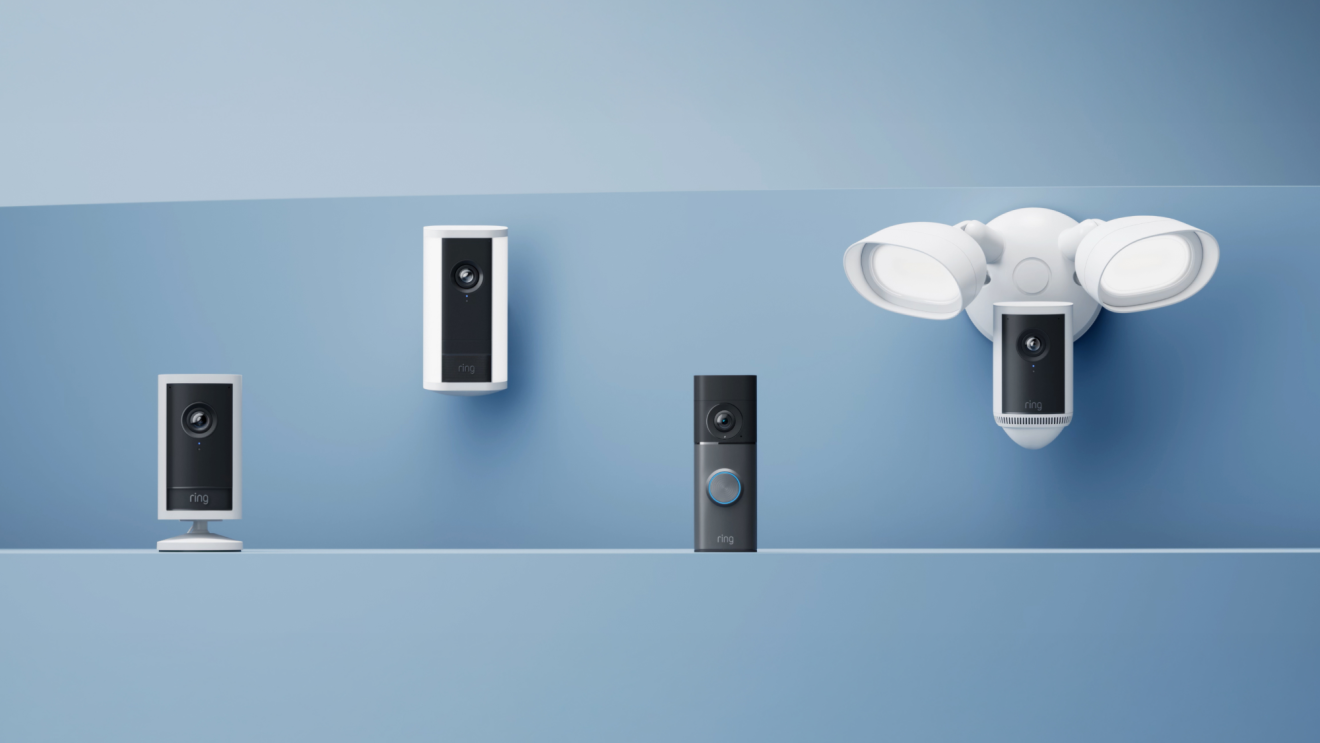
Smart Doorbells and the Legality of the Audio Recording Feature
By: Reese Bell
There has been much fear—and fear-mongering—surrounding the use of mass-surveillance across the U.S., and who exactly may have access to recordings collected by such surveillance. At the center of much of this discussion is an increasingly popular device known as a smart doorbell, frequently associated with the Amazon-subsidiary brand, Ring. The Ring doorbell is a camera and audio system, often placed on the front doors of residential buildings.[1] Ring doorbells provide users with video and audio recordings of activity around their front door, most often for the purpose of increasing the security and protection of their homes.[2] While video recordings capturing the goings-on of a smart doorbell-user’s front yard and adjacent public space is of little legal concern in most states, the audio feature included with these devices has sparked significant legal controversy.
In July of 2019 in Rochester, New Hampshire, a man was shot following a heated argument with his brother, Thomas Burke.[3] At trial the following year, whether Burke shot his brother was not a point of contention; instead, the Court was forced to determine whether audio of the altercation captured on Burke’s sisters’ Ring doorbell could be admitted into evidence by the prosecution.[4]
New Hampshire, like many other states, requires that all parties consent to a recording.[5] Per New Hampshire’s wiretapping and eavesdropping laws, the “willful interception, disclosure, or use of telecommunication or oral communications without the consent of all parties . . .” is prohibited.[6] Burke’s defense attorney argued against the prosecution’s use of the audio, citing the aforementioned two-party consent statute, yet Judge Howard struck down the defense’s argument and determined that the Ring doorbell audio was admissible as evidence.[7] The State argued that because the audio recording did not contain “oral communications,” and since Burke and his brother were well within earshot of other residences and should have expected their argument to be overheard by the public, use of the audio recording did not violate New Hampshire’s wiretapping and eavesdropping laws.[8] In short, the Court found that consent to the recording was not needed from Burke and his brother, because their conversation was of a public nature.[9]
While the Judge’s decision in State v. Burke may not seem likely to infringe too heavily on the privacy laws of U.S. citizens, the admission of the Ring doorbell audio as evidence poses the potential for concerning changes to one- and two-party consent laws. As noted by Assistant Strafford County Attorney Emily Garrod, many questions about the legal status of Ring doorbell audio recordings are still unanswered.[10] Garrod expressed her concern, pointing out that Ring doorbell users could be committing a crime simply by allowing the audio recording feature on their devices to operate as intended.[11] It is not unreasonable to assume that much hair-splitting will be done in the future when determining whether audio recorded on a Ring doorbell is public in nature, or whether consent of those party to the recording is required.
At present, it is legal for homeowners to install and allow the audio recording feature on their Ring doorbells to function, as long as the device is adequately displayed so that visitors and trespassers alike are aware of its existence.[12] It remains to be seen whether future cases will spark further legislation concerning Ring doorbells’ audio recording feature and its compliance with States’ one- and two-party consent laws.
Link to Image Source: https://www.aboutamazon.com/news/devices/ring-camera-4k-home-security
[1] Stewart Grant, How Does a Doorbell Camera Work?, Abode Censors (Nov. 3, 2024), https://goabode.com/blog/how-doorbell-camera-works/#:~:text=any%20home’s%20security.-,How%20Does%20a%20Doorbell%20Camera%20Work?,send%20notifications%20to%20your%20devices.
[2] Id.
[3] Id.
[4] See Anonymous, RSA 570-A Wiretapping and Eavesdropping & Legislative History, New Hampshire Law Library: NHLL Blog (Mar. 6, 2020), https://courts-state-nh-us.libguides.com/blog/RSA-570-A#:~:text=RSA%20570%2DA%20was%20in,legislature%20in%20enacting%20a%20law.
[5] See Todd Feathers, Do Ring Cameras Violate Wiretapping Laws? New Hampshire is About to Find Out, Vice: Tech (Jan. 30, 2020, 9:00 AM), https://www.vice.com/en/article/do-ring-cameras-violate-wiretapping-laws-new-hampshire-is-about-to-find-out/.
[6] See also N.H. Rev. Stat. Ann. § 570A:2 (LexisNexis 2025).
[7] See State v. Burke, No. 219-2019-CR-00781 (N.H. Mar. 4, 2020).
[8] Id.
[9] Id.
[10] Id.
[11] See Todd Feathers, Do Ring Cameras Violate Wiretapping Laws? New Hampshire is About to Find Out, Vice: Tech (Jan. 30, 2020, 9:00 AM), https://www.vice.com/en/article/do-ring-cameras-violate-wiretapping-laws-new-hampshire-is-about-to-find-out/.
[12] See Paul Frew & Gene Petrino, Are Security Cameras Legal?, Security.org (Jul. 14, 2024), https://www.security.org/security-cameras/legality/#:~:text=First%20and%20most%20importantly%2C%20it%20is%20legal,as%20well%20as%20video%2C%20without%20much%20worry.
Leave a Reply
You must be logged in to post a comment.