

The first exclusively online law review.

Author: Nicholas Guy

Smart Doorbells and the Legality of the Audio Recording Feature

Smart Doorbells and the Legality of the Audio Recording Feature

By: Reese Bell

There has been much fear—and fear-mongering—surrounding the use of mass-surveillance across the U.S., and who exactly may have access to recordings collected by such surveillance. At the center of much of this discussion is an increasingly popular device known as a smart doorbell, frequently associated with the Amazon-subsidiary brand, Ring. The Ring doorbell is a camera and audio system, often placed on the front doors of residential buildings.[1] Ring doorbells provide users with video and audio recordings of activity around their front door, most often for the purpose of increasing the security and protection of their homes.[2] While video recordings capturing the goings-on of a smart doorbell-user’s front yard and adjacent public space is of little legal concern in most states, the audio feature included with these devices has sparked significant legal controversy.

The Coldplay Couple: A Cautionary Tale

The Coldplay Couple: A Cautionary Tale

By: Karina Chatha

This past summer, the world was locked in the drama of internet strangers with the “Coldplay Couple”. The incident occurred over a KissCam at a Coldplay concert, where the camera caught a man and a woman in an embrace.[1] However, once they realized they were on camera, they ducked and hid their faces, leading Chris Martin, Coldplay’s singer, to quip “either they’re having an affair or they’re very shy.”[2] Someone in the crowd recorded the KissCam on the Jumbotron and uploaded the video to the popular video-sharing platform, TikTok.

Born to Die: Planned Obsolescence and the Lack of Legal Recourse

Born to Die: Planned Obsolescence and the Lack of Legal Recourse

By: Elena Overstreet

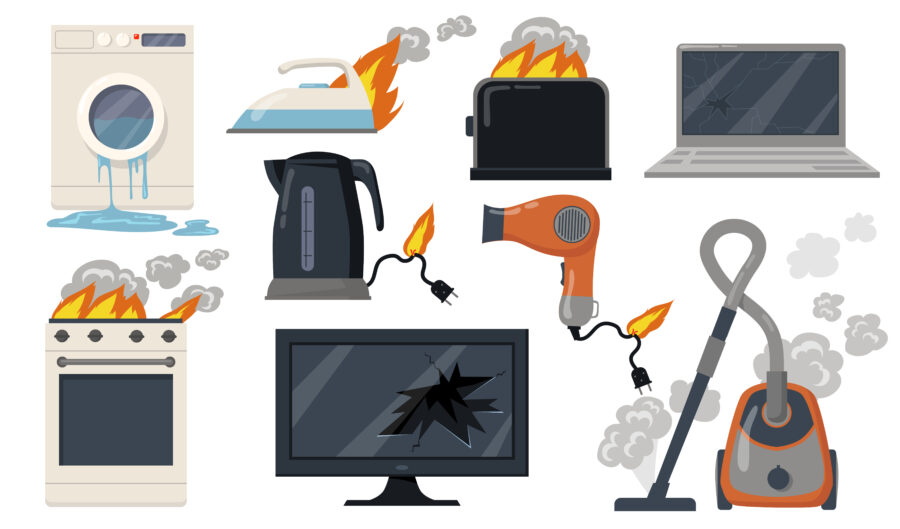
In 2024, technology was the largest category of consumer spending during the holiday season, and it was projected that the 2025 holiday season would be the same.[1] Spending in this area seems to increase each year, with people finding the latest phones, kindles, and Oura Rings under their Christmas trees.[2] The thrill of new devices does not come without a cost, however. By 2030, the annual volume of electronics placed on the market is estimated to have risen to 120 billion kilograms – approximately 264 billion pounds.  While some progress has been made in collecting and recycling the materials used, this progress barely makes a dent in the magnitude of electronic waste being generated.[4] Yet, the trouble does not stop there.

U.S. Business Practices Oppose Effective Crackdown on “Spoofing” Scams

U.S. Business Practices Oppose Effective Crackdown on “Spoofing” Scams

By: Ian Lipka


In 2020, Indian national Hitesh Madhubhai Patel was sentenced to twenty years in prison and almost $9 million in restitution for crimes relating to online and telephone scams he owned and organized.[1] Patel funded and ran India-based call centers that defrauded U.S. victims out of somewhere between $25 million and $65 million from 2013-2016.[2] While Patel’s conviction was certainly a victory for the Justice Department, the issue of online and telephone scams has dramatically increased since Patel’s sentencing five years ago. The Federal Bureau of Investigations (FBI) concluded that U.S. victims lost $16.6 billion in 2024 from online and telephone scams—compared to just shy of $4 billion in 2020.

Citizens are fraudulently deprived of their money now more than ever. And while criminal prosecutions are effective in their own right, the international nature of these scams makes it extremely difficult for countries to stifle them.[4] Most scammers operate overseas and are therefore often beyond the jurisdiction of the victim nation.[5]

Almost four out of every five adults in the U.S. view online/telephone attacks as a major national problem.[6] Countermeasures are needed, but solving the issue of international scamming is not so simple. The problem may be better addressed by tackling the contributing smaller issues gradually. One such issue primed for change is known as “spoofing.”

Page 2 of 2

Powered by WordPress & Theme by Anders Norén