The first exclusively online law review.

Category: Blog Posts Page 68 of 79

Apple’s Latest Lawsuit Arises From the iPhone Defect “Touch Disease”

person-woman-hand-space-1080x675

By: Will MacIlwaine,

On September 7, Apple held its annual fall event. The event featured the introduction of the Apple Watch 2, as well as the iPhone 7, which is the first iPhone not to include a headphone jack.

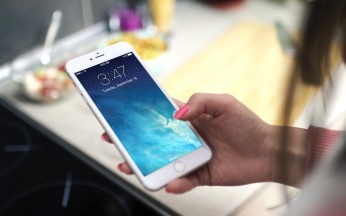
While the fall event might suggest that things are continuously heading in the right direction for the innovative company, a defect associated with the iPhone 6 and 6 Plus devices suggests otherwise. In the United States District Court for the Northern District of California, three iPhone users have filed a class-action lawsuit against Apple for the defect that has been coined “Touch Disease.”[1]

Inside the affected iPhone models are chips that allow a user’s finger and the screen to interact.[2] For some users, these chips are not correctly secured to the logic board of the phone, and fail as a result of the consumer’s normal use of the device.[3] The plaintiffs in this case claim that Apple concealed this defect, which “causes the touchscreens on the iPhones to become unresponsive and fail for their essential purpose as smartphones.”[4] The defect also causes a gray flickering bar to appear at the top of the device’s screen.[5]

All three plaintiffs, Todd Cleary, Jun Bai, and Thomas Davidson, have experienced the “Touch Disease” issue.[6] All three individuals were told that they could pay an additional fee, over $300 dollars, for a replacement phone.[7]

The plaintiffs note that the previous iPhone 5S design included a metal shield to protect the device’s logic board, allowing the phone to better accommodate reasonable use by the consumer.[8] Additionally, the iPhone 5c design used an “underfill” mechanism to reinforce the chips at issue and protect them from normal wear and tear.[9] According to the plaintiffs, the iPhone 6 and 6 Plus models carry neither of these protective features.[10]

The plaintiffs claim that Apple has done nothing to remedy the defect, even though it has had knowledge of the issue for some time.[11] Apple gained this knowledge, according to the plaintiffs, through the records of customer complaints, repair records, and various customer claims.[12] The plaintiffs state that Apple’s lack of action is a result of “unfair, deceptive and/or fraudulent business practices.”[13] They even go as far as to argue that, had they not relied on Apple’s representations regarding the quality of the product, they would have paid less for the iPhones, or would not have purchased them at all.[14]

In their argument plaintiffs first posit that Apple engaged in unfair and deceptive acts in violation of the California Consumers Legal Remedies Act (“CLRA”) by knowingly and intentionally concealing from the customers the fact that the iPhones were faulty.[15] In a general sense, the plaintiffs argue that Apple misrepresented the product, representing that the phones had certain characteristics, uses, or benefits that they did not have.[16] They also argue that Apple misrepresented the quality of the product, and advertised the phones with the intent not to sell them as advertised.[17] Since Apple is in a better position to know the true state of the touchscreen defect, the plaintiffs contend that Apple owed a duty to the customer to disclose this issue.[18]

Further, the plaintiffs argue that since they were deceived in purchasing the phones, which they would not have purchased if they had knowledge about the defects, that Apple was fraudulent in its actions.[19] Among other claims for relief include those based on negligent misrepresentation, unjust enrichment, breach of implied warranty, and claims based on violations of several warranty acts.[20]

The “Touch Disease” only became an issue about six months ago.[21] Further, many users are just now starting to experience this problem on the iPhone 6 and 6 Plus, two years after the release of these models.[22] It’s difficult to believe that Apple knew that this was going to be an issue when it originally advertised and eventually released the phones in September of 2014.[23] Apple, while a powerhouse in the technology industry, cannot predict the future, and it’s certainly plausible that the company had no idea that the affected phones would have this kind of issue more than a year and a half after release. If that’s the case, there does not seem to be any “unfair” or “deceptive” action taken by Apple.[24]

On the other hand, ignoring the issue and continuing to produce and sell these iPhone models after becoming aware of the issue could be seen as deceiving and as misrepresenting the quality of the product, if in fact Apple had reasonable knowledge that the issue was affecting a majority of the models in the iPhone line it was continuing to produce and sell.

In reality though, Apple’s general warranty on its iPhone line is a one-year limited warranty.[25] After that, it is the consumer’s responsibility to pay for necessary repairs. All three plaintiffs in this case had been in possession of their phones for at least one and a half years before beginning to experience this issue.[26]

It would seem to be a bit more complicated if a user experiencing this issue was still within the one-year warranty period, because Apple’s warranties do not include coverage for “defects caused by normal wear and tear or otherwise due to the normal aging of the Apple Product.”[27] Then, the main issue would seem to be whether the defect was really a result of normal wear and tear, compared to a design defect as the plaintiffs claim.[28] If the plaintiffs were still within the warranty period, the claims might have more merit, but since the plaintiffs and many of the individuals having this issue only started to experience it around the two-year mark of owning the phones,[29] this does not seem to be the main subject of potential litigation. In this case, it does not seem likely that the court will side with the customers bringing these claims.

Important to reiterate is the fact that this is a class action. The plaintiffs seek to represent a nationwide class of iPhone 6 and iPhone 6 Plus users. That being said, this could be an issue for Apple if anything actually comes from these claims. Be on the lookout for a response from Apple in the coming weeks.


[1] See Don Reisinger, Apple Is Being Sued Over the iPhone ‘Touch Disease’, Fortune, (Aug. 30, 2016), http://fortune.com/2016/08/30/apple-touch-disease-lawsuit/ (last visited Sep 13, 2016).

[2] See id.

[3] See Class Action Complaint ¶ 27, Davidson v. Apple, Inc., No. 5:16-cv-4942, (N.D. Cal. filed Aug. 27, 2016).

[4] See id. ¶ 1.

[5] See id. ¶ 21.

[6] See id. ¶¶ 8-10.

[7] See id.

[8] See Class Action Complaint, supra note 3, ¶ 28.

[9] See id.

[10] See id. ¶ 30.

[11] See id. ¶ 2.

[12] See id. ¶ 35.

[13] See Class Action Complaint, supra note 3, ¶ 4.

[14] See id. ¶ 38.

[15] See id. ¶ 57; Cal. Civ. Code § 1770 (a)(2),(5),(7),(9) (2016).

[16] See Class Action Complaint, supra note 3, ¶ 57; Cal. Civ. Code § 1770 (a)(5) (2016).

[17] See Class Action Complaint, supra note 3, ¶ 57; Cal. Civ. Code § 1770 (a)(9) (2016).

[18] See Class Action Complaint, supra note 3, ¶ 60.

[19] See id. ¶ 82.

[20] See id. ¶ 15-19.

[21] John Matarese, Apple iPhone ‘Disease’ Making Touch Screens Useless, WCPO Cincinnati (Sept. 12, 2016), http://www.wcpo.com/money/consumer/dont-waste-your-money/apple-iphone-disease-making-touch-screens-useless.

[22] See id.

[23] See id.

[24] See Class Action Complaint, supra note 3, ¶ 4.

[25] See Your Hardware Warranty, http://www.apple.com/legal/warranty/products/ios-warranty-document-us.html#2013328_201623 (last visited Sept. 14, 2016).

[26] See Class Action Complaint, supra note 3, ¶¶ 8-10.

[27] See Your Hardware Warranty, supra note 25.

[28] See Class Action Complaint, supra note 3, ¶ 30.

[29] See Matarese, supra note 21.

Photo Source:

http://siliconangle.com2016/08/person-woman-hand-space-1080×675.jpg.

Identity Misappropriation on Dating Apps: Did You Right Swipe the Right Person?

Tinder dating app photo

By: Tatum Williams,

It is easy to confirm a Tinder profile’s authenticity when the person is someone you know. When this happens, and it often does considering the app boasts an estimated 50 million users[1], beneath the initial awkwardness of swiping across a familiar face, there is assurance. The assurance comes from knowing that the person beyond that profile is who they say they are.

With the slogan, “It’s like real life but better,” Tinder’s innovative design allows users to connect with nearby people using location-based software and basic Facebook information, such as mutual interests and friends.[2] Tinder and apps similar to it, such as Hinge, require this social authentication primarily to put users’ minds at ease over the likelihood of encountering a fake profile.[3] But such is not always the case. Of those who utilize dating apps and online dating, roughly 54% felt that some users seriously misrepresented themselves in their user profile.[4] Evidence of that is the modern phenomenon of “catfishing.” Catfishing, which is defined as the intentional deception of another through the use of a fake profile, typically done in hopes of achieving a romantic connection,[5] has exploited the rise of social media and dating apps. It is now even easier for someone to fabricate a dating profile.[6] Needless to say, the prevalence of dating apps has facilitated deceptive behavior given the availability of anonymous communications.[7]

More often than not, misrepresentations of this nature are harmless. While some people may exaggerate or lie about their preferred television shows or movies, others execute more strategic lies, often pertaining to their age, weight, height, personality traits, interests, monetary status, career aspirations, and even past relationships.[8] Most people are familiar with these kinds of misrepresentations and would agree that these lies, though wrong, are not worthy of serious legal ramifications.[9] Or are they?

This begs the question whether the legal considerations and ramifications associated with dating apps have evolved at the same burgeoning rate as the apps themselves. Unfortunately, the answer is no; dating app users have a low likelihood of success in holding a dating app liable for any harm that the user experiences from his or her interactions with other app users.[10] Most dating apps have combated these potential claims by disclaiming all warranties and representations with regards to other users in their terms of use agreements.[11] And the immunity does not stop there: The Communications Decency Act protects apps from liability based on content posted by users, such as the aforementioned catfishing scams or other misrepresentations.[12] Under the Communications Decency Act, “no provider or user of an interactive computer service shall be treated as the publisher or speaker of any information provided by another information content provider.”[13]

Tinder is relatively new—it was only created in 2012[14]—so not many statistics have been conducted on the number of fake profiles currently in existence. With that said, the rapid pace at which the user base is experiencing growth preserves the potential for misrepresentations and catfishing. Despite the protections dating apps and other forms of online dating services receive, several states have made lying on these platforms a criminal offense.[15] This would seem to suggest that the trend of remaining unpunished for misrepresentation or catfishing is diminishing.[16] But until cyberspace governance evolves to the level that dating apps have, it appears that users’ best defense is to swipe wisely.

[1] See Alexis Kleinman, The Typical Tinder User Spends 77 Minutes Tinding Every Day, Huffington Post (Oct. 31, 2014), http://www.huffingtonpost.com/2014/10/31/77-minutes-tinder_n_6082468.html.

[2] See Jessica L. James, Mobile Dating in the Digital Age: Computer-Mediated Communication and Relationship Building on Tinder (May 2015) (unpublished Master of Arts thesis, Texas State University) (on file with author).

[3] See Lindsay Hildebrant, Media and Self Representative Perceptions: Deception in Online Dating (May 2015) (unpublished undergraduate Honors thesis, Pace University) (on file with Pforzheimer Honors College, Pace University).

[4] See James, supra note 2.

[5] See Krystal D’Costa, Catfishing: The Truth About Deception Online, Scientific American Blog (April 25, 2014), http://blogs.scientificamerican.com/anthropology-in-practice/catfishing-the-truth-about-deception-online/#.

[6] See Keith Wagstaff, Hook, Line and Tinder: Scammers Love Dating Apps, NBC News (April 11, 2014, 5:36 PM), http://www.nbcnews.com/tech/security/hook-line-tinder-scammers-love-dating-apps-n77256.

[7] See Geelan Fahimy, Liable for Your Lies: Misrepresentation Law as a Mechanism for Regulating Behavior on Social Networking Sites, 39 Pepp. L. Rev. 2 (2012).

[8] See id.

[9] See id.

[10] See Greg Mitchell, Digital Dating: Legal Matters to Consider Before Swiping Right, Missouri Lawyers Help Blog (Feb. 12, 2016), http://missourilawyershelp.org/digital-dating-legal-matters-to-consider-before-swiping-right/

[11] See id.

[12] Doe v. MySpace, Inc., 528 F.3d 413, 416 (5th Cir. 2008).

[13] See Fahimy, supra note 7.

[14] See James, supra note 2.

[15] See Fahimy, supra note 7.

[16] See id.

Photo Source:

http://www.hercampus.com/sites/default2015/11/02/tinder.jpg

"Demand Response" In 2016

demand_response2-500x333

By: Ryan Suit,

If you have ever wanted to be paid to do less than you are doing right now, then you might be a fan of “demand response.” Demand response refers to the concept of paying electricity consumers to not use electricity at certain times.[1] Currently, most demand response participants are large commercial industries, and residential participation is still small. But as advancements in technology allow more people and businesses to take part in demand response, paying consumers to not use electricity will have a lot of benefits for consumers, the electric grid, and the environment.[2]

Demand response entails less energy being consumed, which means less energy needs to be produced. For one, this decreases the costs to consumers because they use less energy.[3] Second, demand response allows the grid to be more reliable because there is a lesser likelihood of overload on the grid.[4] Third, it also decreases the amount of carbon dioxide produced by electricity generators who use fossil fuels.[5] Many power plants that use fossil fuels are both inefficient and expensive to operate, so are only turned on when demand for electricity is at its peak. Demand response can prevent the need for these types of plants, and therefore prevent them from producing carbon dioxide pollution, because it helps to balance the supply and demand for electricity by using less energy, rather than producing more.

The big question for demand response is, “Who gets to regulate it?” Section 201 of the Federal Power Act gives the Federal Energy Regulatory Commission (FERC) the power to regulate interstate transmission of wholesale electricity sales.[6] While FERC was given the authority to regulate interstate electricity and wholesale rates, states were left to regulate intrastate electricity sales and retail sales to end-users.[7] Almost one year ago, the Supreme Court held in Learjet that federal natural gas laws do no preempt state laws that regulate any phase of natural gas production.[8] By holding that federal laws did not preempt state regulation of an energy industry, Learjet signaled that the Supreme Court might be in favor of allowing states to regulate demand response.[9] Earlier this year the Court clarified its stance on demand response in FERC v. EPSA.[10] In that case, the Supreme Court confirmed that FERC has the ability to require firms that transmit energy on the grid to accept bids from demand response companies.[11] This makes demand response a much more viable competitor to energy generators, and also creates more of the benefits described above: lower costs, more reliability, and less pollution. Though state regulatory commissions still have the ability to regulate demand response by prohibiting customers in their states from participating in demand response markets[12], the holding in FERC v. EPSA may indicate that “veto” power could be taken away, and FERC might soon have more power to increase demand response schemes.

Demand response is becoming more than just an energy concept, and is gaining more traction both economically and legally. More lawsuits dealing with demand response are likely to be litigated in the near future, but the Supreme Court’s recent rulings show that demand response could be in your near future as well.


[1] See Joel Eisen, FERC v. EPSA and the Path to a Cleaner Energy Sector, 40 Harvard Environmental Law Review 1 (2016).

[2] Id. at 2.

[3] Id.

[4] Id.

[5] Id.

[6] Federal Power Act § 201

[7] Id.

[8] See Oneok, Inc. v. Learjet, Inc.

[9] Ashley Davoli, Demand Response: The Consumer’s Role in Energy Use, Rich. J.L. & Tech. (April 26, 2015) http://jolt.richmond.edu/index.php/demand-response-the-consumers-role-in-energy-use/.

[10] See Federal Energy Regulatory Commission v. Electric Power Supply Assoc., 136 S.Ct. 760 (2016)

[11] Id. at 763-764.

[12] Id. at 779-780.

Smith et al v. Facebook, Inc. et al: Plaintiffs Allege Facebook is Mining Private Medical Information to Generate Profit

Facebook-lawsuit

By: Quinn Novak,


If you Google the American Cancer Society and search through their website for information about breast cancer, do you have a reasonable expectation of privacy? Or do you expect that someone is monitoring your activity and collecting your medical searches? Winston Smith believed he had privacy when searching those types of medical websites for cancer information. Smith did not realize that Facebook collects his private medical information from well-respected cancer organizations[1] and uses that private health data to create marketing profiles, targeting him with tailored advertisements based on his private information.[2] When Smith discovered this reality, he initiated a class action lawsuit against Facebook and seven healthcare organizations, including the American Cancer Society, the American Society of Clinical Oncology, and the Melanoma Research Foundation.[3]

Smith filed the complaint on March 15, 2016 in a San Jose, federal court.[4] The case was assigned to Magistrate Judge Nathanael M. Cousins.[5] The three plaintiffs, including Smith, allege that the named defendants violated the Health Insurance Portability and Accountability Act of 1996 (HIPAA), federal Wiretap Acts, and several state statutes.[6] According to HIPAA, because medical data is private, it should be difficult to acquire and companies are not allowed to gather or share medical information without express authorization of the patient.[7] Plaintiffs argue that because users have no idea that their information is being gathered and because Facebook does not disclose on its data and privacy policies that it tracks, collects, and intercepts users’ sensitive medical information and communications, Facebook and the named healthcare organizations violate HIPAA.[8]

Although it is evident that Facebook is harvesting cancer data to generate profit through targeted advertising,[9] it is unclear if the medical website owners have knowledge that Facebook is using their data.[10] However, if the healthcare organizations were aware that Facebook was collecting their user’s data, plaintiff claims that the organizations should have disclosed their relationship with Facebook to their users.[11]

Although Smith seeks certification, damages, restitution, and permanent injunction from all eight defendants, a Facebook spokesperson stated that the “Lawsuit is without merit and we will defend ourselves vigorously.”[12] In rebuttal, a representative from plaintiff’s counsel, Kiesel Law LLP, stated, “When you’re searching private medical information, you don’t realize it’s being sent to Facebook” and states that there is a reasonable expectation of privacy for these types of searches.[13] Fortunately, not all medical websites allow Facebook to track their user’s communications; the Mayo Clinic and Johns Hopkins Medicine website do not allow Facebook to mine their data through the use of cookies.[14] So, for now, if you need to search for medical information about cancer and you don’t want Facebook to keep track of that information, use one of the numerous protected websites. Otherwise, the next time you log onto Facebook, you can reasonably expect to see advertisements across your newsfeed catering to your cancer medical needs.


[1] See Bethy Squires, Facebook is Mining Private Data from Cancer Organizations, New Lawsuit Alleges, Broadly (Mar. 18, 2016, 4:15 PM), https://broadly.vice.com/en_us/article/facebook-is-mining-private-data-from-cancer-organizations-new-lawsuit-alleges.

[2] See Nicholas Iovino, Facebook Mines Data Off Cancer Sites, Users Say, Courthouse News Service (Mar. 16, 2016, 7:05 PM), http://www.courthousenews.com/2016/03/16/facebook-mines-data-off-cancer-sites-users-say.htm.

[3] See Carrie Pallardy, Lawsuit Claims Facebook Mined PHI from Websites of Cleveland Clinic, MD Anderson Cancer Center & More for Advertising Profit, Becker’s Health IT & CIO Review (Mar. 23, 2016), http://www.beckershospitalreview.com/healthcare-information-technology/lawsuit-claims-facebook-mined-phi-from-websites-of-cleveland-clinic-md-anderson-cancer-center-more-for-advertising-profit.html.

[4] See Smith et al v. Facebook, Inc. et al, PacerMonitor (Apr. 1, 2016, 12:07 AM), https://www.pacermonitor.com/public/case/10970091/Smith_et_al_v_Facebook,_Inc_et_al [hereinafter PacerMonitor]; see Neil Versel, Suit Claims Facebook Mines Private Cancer Data, MedCity News (Mar. 23, 2016, 1:21 AM), http://medcitynews.com/2016/03/facebook-cancer-data/.

[5] See PacerMonitor, supra note 4.

[6] See Versel, supra note 4.

[7] See Squires, supra note 1.

[8] See id.; see Iovino, supra note 2.

[9] See Iovino, supra note 2.

[10] See Squires, supra note 1; see also Versel, supra note 4 (stating that it is unclear whether cancer institutes named in the suit are aware of Facebook’s practices).

[11] See Pallardy, supra note 3.

[12] See Iovino, supra note 2.

[13] See Squires, supra note 1.

[14] See id.


Photo Source: http://www.valuewalk.com/wp-content/uploads/2015/02/Facebook-lawsuit.jpg

Are Your Legal (Or Illegal Undertakings) Really Anonymous?


how-can-i-buy-bitcoins-630x382

By Celtia van Niekerk,

When Silk Road was developed, it became a haven for illegal activity. Masked by the cryptic underworld of the dark web, many people thought that their activities online were finally free from the peering eyes of law enforcement.

The Developer of Silk Road, Ross Ulbricht was ones such person.

He created Silk Road, a website where narcotics were freely sold—an Amazon of the underworld. In order to sell narcotics, buyers and sellers turned to bitcoin, a digital currency which enabled them to conduct their activities in secrecy… Or so they thought.

The Bitcoin network relies on a shared public ledger called a block chain. This block chain records all transactions and in that way, the amount in each wallet is calculated.[1] This process is made secure through cryptography. The difficulty for law enforcement is that a user’s true identify is kept secret because instead of using your real name like you would at a bank, a user creates a code which serves as their digital signature in the blockchain.[2] But while Bitcoins itself are anonymous, spending them starts a forensic trail that may lead right back to you.[3]

Graduate students at Penn State were the first to crack the cryptography wall—by isolating some of the Bitcoin addresses, they were able to isolate other address and eventually map the IP addresses of over 1000 Bitcoin addresses.[4] But this easier said than done—once bitcoins mix in with other users, the trace is harder to follow as Bitcoin is designed to blur the lines between the IP address and the transaction.[5] According to Sarah Meiklejohn, a computer scientist, once you catch someone buying an illegal product off a website such as Silk Road, the blockchain serves as a history of all their criminal activity.[6]

Some have contended that the Federal government may issue their own cryptocurrency, like Bitcoin which would require a user to verify their real world identity.[7] But a move like this may have no effect on the popularity of Bitcoin, which offer’s their users more anonymity. One thing is for certain, Bitcoin is not as anonymous as once believed, leading law enforcement to take notice.


[1] Bitcoin, How does Bitcoin Work? https://bitcoin.org/en/how-it-works (last accessed March 14, 2016).

[2] John Bohannon, Why criminals can’t Hide behind Bitcoin, Science, (March 9,2016).

[3] Elliot Maras, How Bitcoin Technology Helps Law Enforcement Catch Criminals, CCN.LA, (March 10, 2016).

[4] Id.

[5] Supra, note 2.

[6] Supra, note 3.

[7] Supra, note 2 (Statement from Bill Gleim, head of machine learning at Coinalytics).


Photo Source: http://media.coindesk.com/2013/08/how-can-i-buy-bitcoins-630×382.jpg

Big Tech Company v. Federal Government Part I: Is Code Speech? Is Privacy at Stake?

think_different_apple-1680x1050By: Biniam Tesfamariam,

Silicon Valley Company against the Federal Government, who will win? Apple has so far refused to comply with a federal magistrate-judge’s demands of the company assisting the FBI to break the encryption of an iPhone. More specifically, Apple was asked to create new software that would allow law enforcement officials to break into the iPhone. Not just any iPhone, but the one iPhone that belonged to one of the San Bernardino shooters -of last year- responsible for killing 14 people in California.

So what is at issue here? There are multiple, one being centered around the All Writs Act, which in a nutshell, allows courts to make a company turn over a customer’s data to law enforcement.[1] The act reads, “The Supreme Court and all courts established by Act of Congress may issue all writs necessary or appropriate in aid of their respective jurisdictions and agreeable to the usages and principles of law; an alternative write or rule nisi may be issued by a justice or judge of a court which has jurisdiction”.[2]

The Apple’s main issue with such a request is the apparent risk of all customer data by legal precedent. Never before has a federal court granted the government to force companies like Apple to weaken its security system. This issue could easily be categorize seem to belong to the legislature.

The legal argument Apple is expected to use can be summed up like this: Code is protected speech, so the government can’t compel Apple to write a new version of iOS any more than it can force an author to write a story. There is some precedent that code is protected speech.[3] Proving that code is protected speech isn’t the biggest obstacle Apple faces. Core to Apple’s argument against writing a new version of its operating system is that, by complying, it will make its customers less secure.[4]

Whatever the outcome of this current case, the disagreement will have a significant legal impact for the future of digital privacy in the United States.


[1] The All Writ Act, 28 U.S.C § 1651 (1789).

[2] Id.

[3] David Goldman, Apple’s Case Against the FBI won’t be easy, CNN (Feb. 25, 2016 10:39 AM), http://money.cnn.com/2016/02/25/technology/apple-fbi-court-case/index.html?iid=SF_LN.

[4] Id.


Photo Source: https://www.google.com/url?sa=i&rct=j&q=&esrc=s&source=images&cd=&ved=0ahUKEwiEsOmn0OvLAhVE1CYKHSFLA0MQjBwIBA&url=http%3A%2F%2Fwww.hdwallpapers.in%2Fdownload%2Fthink_different_apple-1680×1050.jpg&psig=AFQjCNEXjBnl83KMr6BETq-O_1FCFAO7Dw&ust=1459537843768178

Big Tech Company v. Federal Government Part 2:

micro soft

By: Biniam Tesfamariam,

Microsoft is also in a legal battle with the U.S. government, but this fight deals with consumer privacy information that can only be accessed in another country. In December 2013, the U.S. government obtained a search warrant requesting information about an email user for an investigation apparently involving drugs and money laundering.[1] Microsoft is refusing to cooperate because the data in question is stored in Ireland, and the company argues that the U.S. government cannot force it to hand over data stored outside American soil.[2]

Users of a Microsoft e-mail account can, with a user name and a password, send and receive email messages as well as store messages in personalized folders. E-mail message data include both content information- the message and subject line. Also non-content information such as: the sender address, the recipient address, and the date and time of the transmission.

Microsoft stores e-mail messages sent and received by its users in its datacenters, once of which is of special interest to the U.S. government. In 2013, the U.S. Department of Justice served Microsoft with a subpoena and a search for emails that live in a data center in Ireland.[3] One of Microsoft’s arguments is that for data held overseas, the U.S. government should abide by its mutual legal assistance treaties, which are agreement between the United States and foreign countries that typically require the requesting government to be in compliance with other government’s laws.[4] Irish law requires authorization from an Irish District Court judge to obtain e-main content from a provider.[5]

The judge in the case, James Francis, agreed with the government, arguing that the search warrant issued in this case applies to data in Ireland because it’s more of a hybrid between a warrant and a subpoena. What this means: the request would be legal since subpoenas have reach outside the U.S.[6]

Nonetheless, it will be interesting to see what occurs when this case goes on appeal, as it has huge implications for the privacy of U.S. citizens who use American internet services.


[1] Lorenzo Bichhierai, Microsoft Fights U.S. Government Over Rights to Data on Foreign Servers, mashable (Jun. 12, 2014), http://mashable.com/2014/06/12/microsoft-u-s-government-data-foreign-servers/#Hcz6bzoAVmqs.

[2] Id.

[3] In re Warrant to Search a Certain E-Mail Account Controlled and Maintained by Microsoft Corp., 15 F. Supp.3d 466, 2014 WL 1661004 (S.D.N.Y. Apr. 25, 2014).

[4] David Goldman, Microsoft is Fighting the DOJ too, CNN (Feb. 23, 2016 6:52 PM), http://money.cnn.com/2016/02/23/technology/microsoft-ireland-case/index.html.

[5] Criminal Justice Mutual Assistance Act, (Northern Ireland) 2008.

[6] In re Warrant to Search a Certain E-Mail Account Controlled and Maintained by Microsoft Corp., 15 F. Supp.3d 466, 2014 WL 1661004 (S.D.N.Y. Apr. 25, 2014)


Photo Source:  https://tctechcrunch2011.files.wordpress.com/2015/06/shutterstock_192614108.jpg

Shaolin In Jeopardy: Possible Fates For the Sole Copy of Wu-Tang Clan’s Latest Album

Wu-Tang-Box

By: Sean Livesey

In November of 2014, Josh Lepchitz published a blog post entitled “Step Into Shaolin and See Where the Wu-Tang Clan Could Be Taking Music.”[1] The post includes a brief yet incisive appraisal of the current state of the music industry from the artists’ perspective, given the advent and climbing popularity of services like Spotify, Pandora and Youtube.[2] Given this context, the post goes on to address a novel approach to music sale taken by the Wu-Tang Clan: the group recorded and produced a 31-track album in secret, creating one single copy to be sold directly to the highest bidder, with sole rights to the art transferring to the buyer at the time of sale. The album is entitled “Once Upon a Time in Shaolin.” Lepchitz’s post concludes with thoughts on Wu-Tang’s contribution to the music industry, not only as artists, but as market innovators, as well.[3]

Sure enough, Once Upon a Time in Shaolin was sold directly to a single wealthy buyer by the name of Martin Shkreli in May of 2015.[4] Shkreli, also referred to as “pharma bro” by the media, is the 32-year old CEO of a pharmaceutical company. He first “entered the public consciousness…when he announced a price spike in [October 2015]…for Daraprim, a 62-year-old medication used by AIDS and cancer patients to fight life-threatening parasitic infections, that upped the price from $13.50 USD to $750 a pill.[5] The public reacted very negatively to what was perceived as price gouging by Shkreli. When Shkreli bought the coveted Wu-Tang album he tweeted ostentatiously about it:

Figure 1:[6]

WU tang image 1

Martin Shkreli’s plans for the album were immediately unclear. Shortly after purchasing the album and attaining sole ownership of its contents, he teased that he might play part of it for the public. He even said that he’d probably never hear it, and that he “just thought it would be funny to keep it from people.”[7] However, while Shkreli obtained title to and possession of the album, his sole ownership is not entirely without limitations. One key provision the under the contract is that the album’s copyright belongs to the album’s creators, Wu-Tang Clan, for the next 88 years.[8] This means Shkreli will not be legally permitted to distribute the music, or make it “commercially available” for 88 years.[9] VICE later caught up with Shkreli at his midtown apartment. When asked if people would ever be able to hear the album, Shkreli replied, “It depends on the world. I could see myself in a place where I break it, and I’ve seriously considered that – just snap it in half and bury the remains of it so no one tries to reconstruct it. I’ve seen a world where I give it away for free. I’ve seen a world where I charge for it or something… If people want to hear it, I’ll put it out. If people don’t want to hear it – they don’t appreciate Wu Tang for what I think it is – that’s fine, too… Who knows…”[10]

Then, in a major turn of events, Martin Shkreli was arrested on December 17, 2015 for securities fraud and the orchestration of what amounts to a complex Ponzi scheme, wherein he used sham consulting operations to make secret payoffs.[11] “’Federal prosecutors accused Shkreli of engaging in a complicated shell game after his defunct hedge fund, MSMB Capital Management, lost millions,’ Bloomberg reports.”[12] Brooklyn U.S. Attorney Robert Capers stated, “His [Shkreli’s] plots were matched only by efforts to conceal the fraud, which led him to operate his companies, which including a publicly traded company, as a Ponzi scheme…”[13]

Shkreli defended his actions after the fact, saying, “In law, you can be prosecuted for not maximizing profits. In fact, I know people who have. And you have to do everything in your power to make as much money as possible in the system we’ve got. That’s business, you can’t hold back.”[14]

Members of the Wu-Tang clan responded to Shkreli’s arrest. “In a statement mailed to Bloomberg Businessweek, RZA [of the Wu-Tang Clan] wrote, ‘The sale of Once Upon a Time in Shaolin was agreed upon in May, well before Martin Shkreli’s [sic] business practices came to light. We decided to give a significant portion of the proceeds to charity.’”[15] Many were quick to speculate as to the fate of the Wu-Tang album, and whether the album would ever reach the public.

Myths began to surround the prospect of the album’s release to public. The most famous of these myths was probably what I’ll call “the Bill Murray caveat.” At least seven major news outlets released headlines referring to a Bill Murray clause in the contract between Shkreli and Wu-Tang.[16] The clause purportedly states that “the seller may legally plan and attempt to execute one (1) heist or caper to steal back Once Upon A Time In Shaolin, which, if successful, would return all ownership rights to the seller. Said heist or caper can only be undertaken by currently active members of the Wu-Tang Clan and/or actor Bill Murray, with no legal repurcussions…”[17] It turns out, however, that the clause was merely a hoax, and this language never actually existed in the written contract.

Figure 2:[18]

WU tang image 2

Hoaxes aside, there appear to be three legitimate legal possibilities that could release the album from Shkreli’s exclusive ownership. The first possibility is asset forfeiture to the U.S. government.[19] As of now, the feds do not have possession of or access to the Wu-Tank album.[20] The FBI is still investigating Shkreli’s case. If, however, the money that paid for the album can be linked with the money stolen from investors, executive power allows the U.S. government to enact asset forfeiture.[21]

Asset forfeiture would only be a possibility if Shkreli is convicted because this is a criminal case. Civil cases, on the other hand, do not require a civil judgment for asset forfeiture to be enacted by the government. In the event of an FBI discovery of such a link and a subsequent criminal conviction, the government could seize the Wu-Tang album and sell it to the public in order to recover some of the funds Shkreli allegedly stole from his investors. The FBI considers asset forfeiture to be the most effective means of recovering property and funds to compensate innocent victims of white-collar crimes.

The charges in the affidavit state, “The United States hereby gives notice to the defendants that, upon their conviction of any of the offenses charged in Counts One through Seven,[22] the government will seek forfeiture, in accordance with Title 18, United States Code, Section 981(a)(1)(C) and Title 28, United States Code, Section 2461(c), of any property, real or personal, which constitutes or is derived from proceeds traceable to any such offenses.”[23]

The second possibility is related to the first in that it, too, would result in a likely sale of the album to the public. However, it could be done in the absence of an FBI seizure of the album.[24] Mounting financial pressure on Shkreli (due to the pending lawsuit and virtually inevitable fines and penalties) could result in such a “forced sale.”[25] One interesting aspect of this scenario is the speculable market price of the album, now that it has received so much extra media exposure because of its link to the notorious high-profile CEO.[26] Shkreli could theoretically sell the album as an investment with a sizeable return.

The third possibility that could release the album from Shkreli’s exclusive ownership is an internet liberation through a formal request under the Freedom of Information Act.[27] While a somewhat unlikely possibility, a popular enough petition to release the album could carry weight in Washington. In the past, such requests have forced revelation of a great deal of information, including things like the White House beer recipe and the FBI’s Twitter slang dictionary.[28]

Will the public ever hear Once Upon a Time in Shaolin any time soon? That will likely be up to Shkreli. In spite of his accusations, he currently retains the right to sell the album, distribute it for free, or destroy it, without legal repercussions. The possibility of a seizure by the FBI seizure of the album, which is dependent on a criminal conviction, could be years away, and the chances of a revelation under the Freedom of Information Act is probably slim. Perhaps Shkreli will even have a change of heart and return the album to its creators, but I wouldn’t hold my breath.


[1] http://jolt.richmond.edu/index.php/blog-step-into-shaolin-and-see-where-the-wu-tang-clan-could-be-taking-music/

[2] http://jolt.richmond.edu/index.php/blog-step-into-shaolin-and-see-where-the-wu-tang-clan-could-be-taking-music/

[3] Id.

[4] http://pitchfork.com/news/62465-wu-tang-clans-once-upon-a-time-in-shaolin-bought-by-pharmaceuticals-ceo-martin-shkreli/

[5] http://www.highsnobiety.com/2015/12/18/possible-outcomes-wu-tang-once-upon-a-time-in-shaolin/

[6] https://twitter.com/MartinShkreli?ref_src=twsrc%5Egoogle%7Ctwcamp%5Eserp%7Ctwgr%5Eauthor

[7] http://www.theatlantic.com/entertainment/archive/2015/12/pharma-bro-martin-shkreli-wu-tang-asset-forfeiture/421011/

[8] http://www.highsnobiety.com/2015/12/18/possible-outcomes-wu-tang-once-upon-a-time-in-shaolin/

[9] http://www.highsnobiety.com/2015/12/18/possible-outcomes-wu-tang-once-upon-a-time-in-shaolin/

[10] http://www.vice.com/video/drinking-wine-and-playing-chess-at-martin-shkrelis-midtown-apartment

[11] http://www.theatlantic.com/entertainment/archive/2015/12/pharma-bro-martin-shkreli-wu-tang-asset-forfeiture/421011/

[12] http://www.theatlantic.com/entertainment/archive/2015/12/pharma-bro-martin-shkreli-wu-tang-asset-forfeiture/421011/

[13] http://www.highsnobiety.com/2015/12/18/martin-shkreli-arrested/

[14] https://www.youtube.com/watch?v=JTNOWSKMS10

[15] http://pitchfork.com/news/62465-wu-tang-clans-once-upon-a-time-in-shaolin-bought-by-pharmaceuticals-ceo-martin-shkreli/

[16] http://www.newsweek.com/media-was-tricked-thinking-bill-murray-can-steal-2-million-wu-tang-album-403746

[17] http://www.newsweek.com/media-was-tricked-thinking-bill-murray-can-steal-2-million-wu-tang-album-403746

[18] http://www.newsweek.com/media-was-tricked-thinking-bill-murray-can-steal-2-million-wu-tang-album-403746

[19] http://www.highsnobiety.com/2015/12/18/possible-outcomes-wu-tang-once-upon-a-time-in-shaolin/

[20] http://www.highsnobiety.com/2015/12/18/possible-outcomes-wu-tang-once-upon-a-time-in-shaolin/

[21] http://www.highsnobiety.com/2015/12/18/possible-outcomes-wu-tang-once-upon-a-time-in-shaolin/.

Brooklyn U.S. Attorney Robert Capers stated, “We’re not aware of where he got the funds for the Wu-Tang album.” (http://www.highsnobiety.com/2015/12/18/martin-shkreli-arrested/)

[22] https://assets.documentcloud.org/documents/2648482/Shkreli-Complaint.pdf

[23] http://www.highsnobiety.com/2015/12/18/possible-outcomes-wu-tang-once-upon-a-time-in-shaolin/

[24] Id.

[25] Id.

[26] Id.

[27] Id.

[28] Id.


Photo Source:  http://blogs-images.forbes.com/zackomalleygreenburg2014/05/Wu-Tang-Box.jpg

Error 53: The iPhone Error Message Enraging Apple Users Worldwide

image 53

By: Meghan Murphy,

Shattered your iPhone 6 screen? Before having it fixed—beware third-party repairs. iPhone users around the world are outraged at the “Error 53” message appearing on their screens after updating to the newest iOS software.[1] As The Guardian reported recently, iPhone 6, 6S and 6+ users are relating countless stories of needing their shattered screens fixed, and going to a local merchant to have the work done.[2] Sometimes in the course of these repairs, the original home button was damaged and replaced.[3] Repaired well, these phones worked for months—until they attempted to update the iOS software as Apple recommends, and received the “Error 53” message before their phones became unusable.[4]

The problem appears to be in the hardware—often within the course of screen repair, the hardware connecting the fingerprint sensor on the home button could be damaged.[5] When the software attempts to update, it runs a diagnostic to make sure that all of the hardware is intact and working—and if the diagnostic finds a non-original home button, it shuts the entire phone down.[6] Apple claims this is a security measure, to make sure that no one can tamper with the home button or install another fingerprint sensor to gain access to someone else’s phone.[7] Even if this is the case, such an all-encompassing security measure seems extreme, especially considering customers had no notice that it would occur.[8]

Seattle firm PCVA agreed—and filed a class action lawsuit against Apple on February 5th, 2016.[9] As a firm press release stated, “We believe that Apple may be intentionally forcing    users to use their repair services, which cost much more than most third party repair shops. Where you could get your screen replaced by a neighborhood repair facility for $50-80, Apple charges $129 or more. There is incentive for Apple to keep end users from finding alternative methods to fix their products.”[10] However, in the interim, business savvy Apple took a U-turn and now claims now that “[diagnostic] test was designed to check whether Touch ID works properly before the device leaves the factory, and wasn’t intended to affect customers.”[11] As of February 18th, Apple is now providing new software available in iOS update 9.2.1, which they say will restore previously “bricked” devices, and offering reimbursements to those who paid for out-of-warranty device replacements.[12]

The future of the lawsuit is unclear at this juncture. While Apply has clearly attempted to mitigate the damage by restoring old devices and offering reimbursements, surely many loyal Apple customers are still angry at Apple’s actions. It is possible that even with the software fix, miffed customers will still want to proceed with the lawsuit—although perhaps with a different spin. Only time will tell.


[1] Miles Brignall, “‘Error 53’ fury mounts as Apple software update threatens to kill your iPhone,” Guardian (Feb. 5, 2016, 1:59 PM), http://www.theguardian.com/money/2016/feb/05/error-53-apple-iphone-software-update-handset-worthless-third-party-repair.

[2] Id.

[3] Jack Nicas, “‘Error 53′: Your Repaired iPhone Is Dead,” Wall Street J. Blog (Feb. 5, 2016, 4:07 PM), http://blogs.wsj.com/digits/2016/02/05/apple-error-message-killing-iphones/?mod=trending_now_4.

[4] Id.

[5] Brignall, supra note 1.

[6] Id.

[7] Chris Johnston, “Apple says iPhone ‘Error 53′ is to protect customers’ security,” guardian (Feb. 6, 2016, 8:57 PM), http://www.theguardian.com/technology/2016/feb/06/apple-says-iphone-error-53-is-to-protect-customers-security.

[8] Nicas, supra note 3.

[9] Miles Brignall, “Apple under pressure as lawyers pledge action over ‘Error 53’ codes,” Guardian (Feb. 8, 2016, 11:56 AM), http://www.theguardian.com/business/2016/feb/08/apple-under-pressure-lawyers-error-53-codes.

[10] “Class Action Lawsuit: Apple IPhone ‘Error 53,’” PCVA Law Firm (Feb. 5, 2016), http://www.pcvalaw.com/apple-iphone-error-53-lawsuit/ (last visited Feb. 23, 2016).

[11] “If you see error 53 and your iPhone or iPad gets stuck on the ‘Connect to iTunes‘ screen,” Apple https://support.apple.com/en-us/HT205628 (last modified Feb. 19, 2016).

[12] Id.


Photo Source:  http://rack.2.mshcdn.com/media/ZgkyMDE2LzAyLzA2LzI5L2FwdG91Y2hpZC44ZDU3Mi5qcGcKcAl0aHVtYgk5NTB4NTM0IwplCWpwZw/18551a5a/ba8/ap-touch-id.jpg

Page 68 of 79

Powered by WordPress & Theme by Anders Norén